Mastering Adaptive Learning Platforms: Boost Retention by 35%
Advertisements
Adaptive learning platforms are reshaping education by combining personalized content delivery with study techniques designed to strengthen understanding and long-term retention.
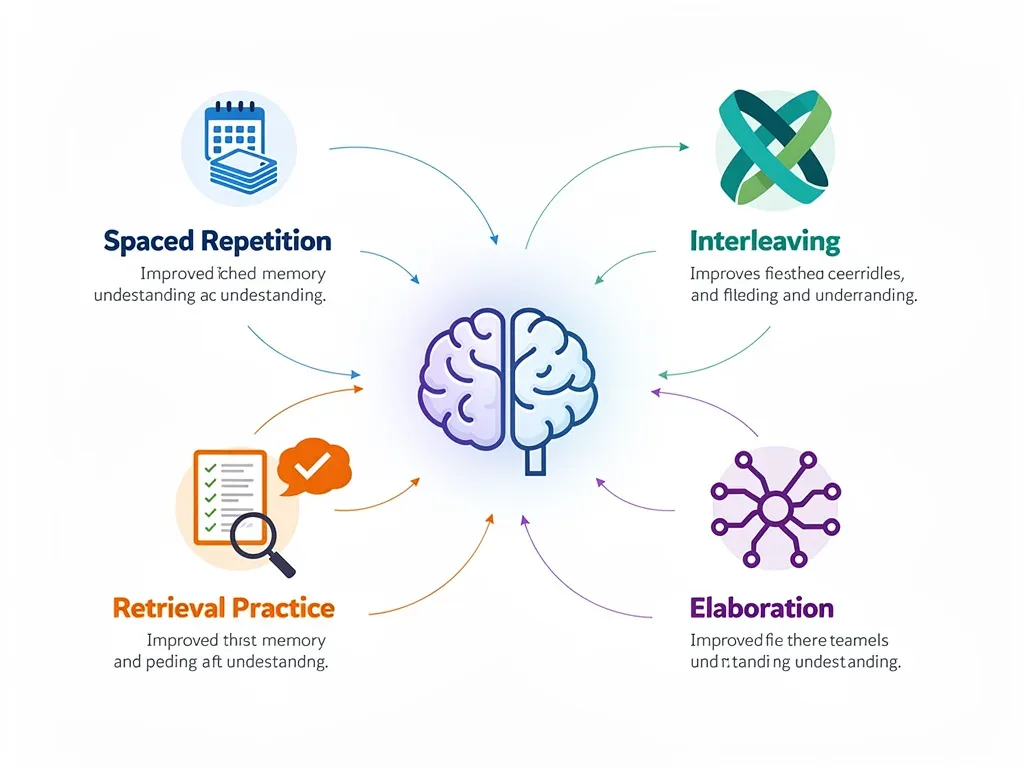
The source highlights four frameworks—spaced repetition, interleaving, retrieval practice, and elaboration—as important methods for improving how students process and retain information.
When these approaches are integrated into adaptive systems, the learning experience can become more targeted, responsive, and aligned with individual student needs.
The Rise of Adaptive Learning Platforms in Modern Education
Adaptive learning platforms personalize educational experiences by adjusting content, pace, and difficulty according to student performance and progress.
This approach moves beyond uniform instruction by identifying knowledge gaps and delivering material that better reflects each learner’s current level.
Institutions can also use the resulting data to understand curriculum performance, monitor student needs, and refine teaching strategies over time.
Personalization at Scale: A Key Advantage
One major advantage of adaptive learning platforms is their ability to provide individualized learning paths to large numbers of students simultaneously.
Individualized learning paths
Real-time performance feedback
Automated content adjustments
Enhanced student engagement
Real-time adaptation allows the system to increase or reduce difficulty depending on how a student responds to specific material.
The continuous feedback generated by these systems can also help educators identify where additional guidance or intervention may be needed.
Framework 1: Spaced Repetition for Long-Term Memory
Spaced repetition strengthens long-term memory by reviewing information at progressively longer intervals rather than concentrating all study into a single session.
Within adaptive learning platforms, algorithms can determine when a concept should be reviewed based on previous student performance.
This approach helps reduce reliance on cramming and focuses study time on material that is approaching the point at which it may be forgotten.
Implementing Spaced Repetition in Adaptive Systems
Spaced repetition systems begin with initial exposure to material and then schedule future reviews based on recall performance.
Initial learning phase
Short review interval
Medium review interval
Long review interval (and so on)
If a student struggles with an item, the review interval can become shorter, while consistently remembered material can be scheduled less frequently.
This makes the study process more efficient by directing attention toward concepts that require greater reinforcement.
Framework 2: Interleaving for Deeper Understanding
Interleaving involves mixing different types of problems or topics during the same study session instead of practicing one type repeatedly.
This forces learners to identify which strategy or concept applies to each problem rather than simply repeating the same solution pattern.
Within adaptive learning platforms, interleaving can be managed automatically by adjusting the sequence and variety of exercises presented to each student.
Applying Interleaving in Digital Environments
Digital systems can categorize exercises by topic and difficulty before presenting them in mixed sequences designed to encourage comparison and discrimination.
Mixed practice problems
Discrimination of concepts
Enhanced problem-solving
Improved knowledge transfer
Performance data can then reveal which concepts students struggle to distinguish, allowing the platform to provide additional targeted practice.
This method is especially useful in subjects where learners must choose between multiple related strategies rather than apply one method automatically.
Framework 3: Retrieval Practice for Active Recall
Retrieval practice strengthens learning by requiring students to actively recall information instead of simply rereading or reviewing it passively.
Adaptive learning platforms can incorporate frequent quizzes, flashcards, and self-assessment activities throughout the learning process.
These exercises reveal what students can successfully retrieve and identify concepts that may require additional explanation or practice.
Integrating Retrieval Practice into Adaptive Learning Platforms
Retrieval practice can include short-answer questions, concept mapping, flashcards, and problem-solving activities that require active recall.
Frequent low-stakes quizzes
Flashcard systems with recall prompts
Interactive self-assessment tools
Immediate and targeted feedback
The system can analyze accuracy and response patterns to determine whether additional instructional material should be presented.
This feedback loop turns assessment into part of the learning process rather than limiting testing to the end of a unit.
Framework 4: Elaboration for Deeper Conceptual Understanding
Elaboration encourages learners to connect new information with existing knowledge and explain concepts using their own words.
Adaptive systems can support this process through prompts that ask students to compare ideas, explain relationships, or apply concepts to new situations.
This deeper processing helps build more interconnected knowledge structures and supports understanding beyond simple memorization.
Cultivating Elaboration Through Adaptive Tools
Adaptive tools can encourage elaboration through open-ended questions, reflective prompts, comparisons, and application exercises.
Open-ended questions requiring explanations
Prompts for comparing and contrasting concepts
Application of knowledge to new scenarios
Peer-to-peer explanation activities
The platform can evaluate responses and provide feedback that helps students refine incomplete or inaccurate explanations.
This process also helps reveal conceptual gaps that might not become visible through simple recall exercises alone.
Synergistic Effects: Boosting Retention by 35% with Combined Frameworks
The source presents the strongest benefits as emerging when adaptive learning platforms combine all four frameworks instead of applying them separately.
Retrieval practice can identify weak areas, spaced repetition can schedule future reviews, interleaving can strengthen discrimination, and elaboration can deepen conceptual understanding.
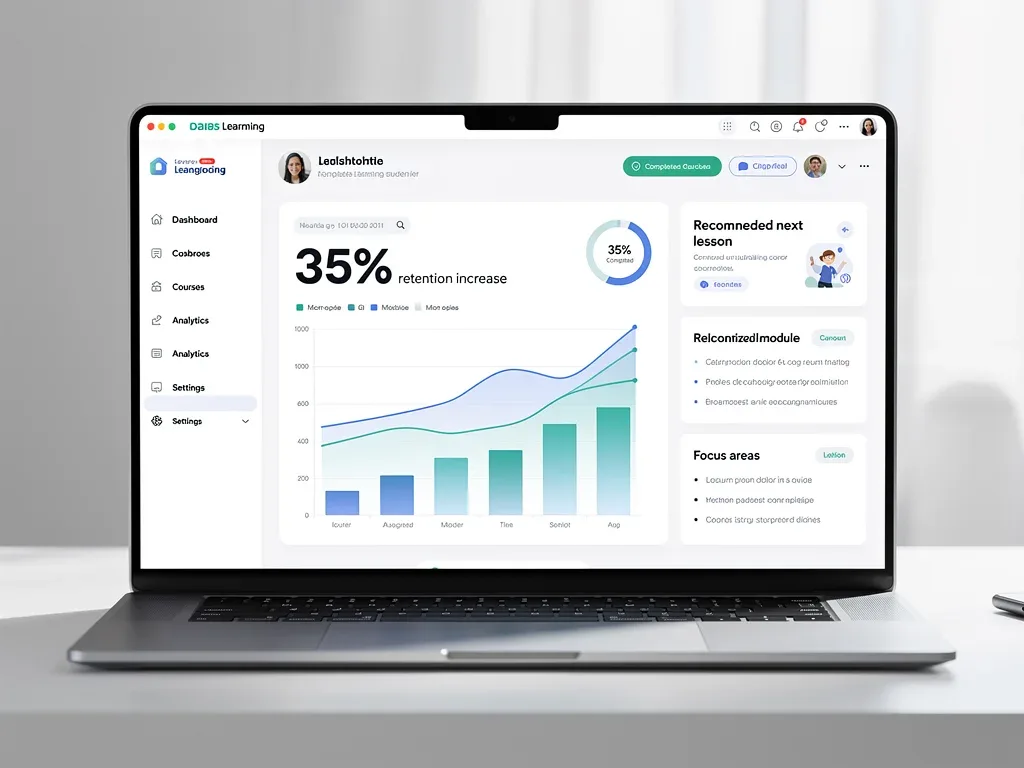
This coordinated approach is described as contributing to a reported 35% increase in retention by addressing both memory and deeper comprehension.
Optimizing Learning Through Integrated Design
Integrated systems need to determine which framework should be used at each point based on a student’s current performance.
Dynamic framework orchestration
Real-time adaptation to student needs
Maximized learning efficiency
Holistic approach to knowledge acquisition
A learner struggling with a concept might receive retrieval questions, an elaboration prompt, additional explanation, and later spaced reviews.
This continuous interaction between frameworks allows adaptive learning platforms to personalize not only content but also the study methods applied.
Challenges and Future Directions for Adaptive Learning Platforms
Despite their potential, adaptive learning platforms still face challenges related to cost, content development, teacher training, and access to technology.
Institutions also need educators who understand how to integrate these tools into existing teaching methods rather than treating them as isolated software.
Future improvements in artificial intelligence and machine learning may make personalization more sophisticated while expanding access to adaptive learning systems.
Ensuring Equity and Accessibility in Adaptive Learning
Accessibility remains an important consideration because students may have different levels of access to devices, connectivity, and assistive technologies.
Addressing digital divide
Universal design for accessibility
Teacher training and support
Ethical AI in education
Features such as text-to-speech, adjustable text presentation, and assistive technology compatibility can help make platforms more inclusive.
The source also highlights data privacy, algorithmic bias, and ethical AI as issues that need attention as these systems become more widely used.
Measuring the Impact: Data-Driven Retention Improvements
The source connects the reported 35% retention improvement with the ability of adaptive learning platforms to collect and analyze detailed student performance data.
Tracking responses, progress, and learning paths can help identify where students perform well and where additional support may be required.
Institutions can use these insights to evaluate teaching strategies, identify learners who may be struggling, and refine educational interventions.
Analytics for Enhanced Student Success
Analytics dashboards can provide students and educators with detailed information about performance and progress.
Real-time performance tracking
Identification of learning gaps
Personalized progress reports
Actionable insights for educators
Students can use these insights to identify areas for improvement, while educators can examine class-wide patterns and individual needs.
The same data can also help adaptive systems refine their algorithms and improve future content recommendations.
Key Framework | Primary Benefit |
|---|---|
Spaced Repetition | Optimizes long-term memory recall by scheduling reviews at increasing intervals. |
Interleaving | Enhances deeper understanding and problem-solving through mixed practice. |
Retrieval Practice | Strengthens memory and identifies knowledge gaps through active recall. |
Elaboration | Fosters conceptual understanding by connecting new information to existing knowledge. |
Frequently Asked Questions About Adaptive Learning Platforms
What exactly are adaptive learning platforms?▼
Adaptive learning platforms are educational systems that adjust content, pace, and instructional activities according to individual student performance and progress.
How do these platforms increase retention by 35%?▼
The source associates the reported increase with the combined use of spaced repetition, interleaving, retrieval practice, and elaboration within personalized learning systems.
Can adaptive learning platforms be used for all subjects?▼
The source presents them as versatile tools that can support fields ranging from STEM subjects to humanities and language learning.
What are the main benefits for educators?▼
Educators can use detailed performance data to identify learning gaps, target interventions, and understand how students respond to different instructional approaches.
What role does AI play in adaptive learning?▼
AI supports personalization by analyzing student performance, adjusting content delivery, and helping determine which learning activities should be presented next.
Perspectives
The continued development of adaptive learning platforms points toward increasingly personalized approaches to education and study design.
Combining data analysis with proven learning frameworks can help educators provide more targeted support while giving students greater visibility into their own progress.
As these systems evolve, their effectiveness will depend on thoughtful implementation, accessibility, educator involvement, and responsible use of student data.