2026 Outlook: 4 Emerging Job Skills US High Schools Prioritize
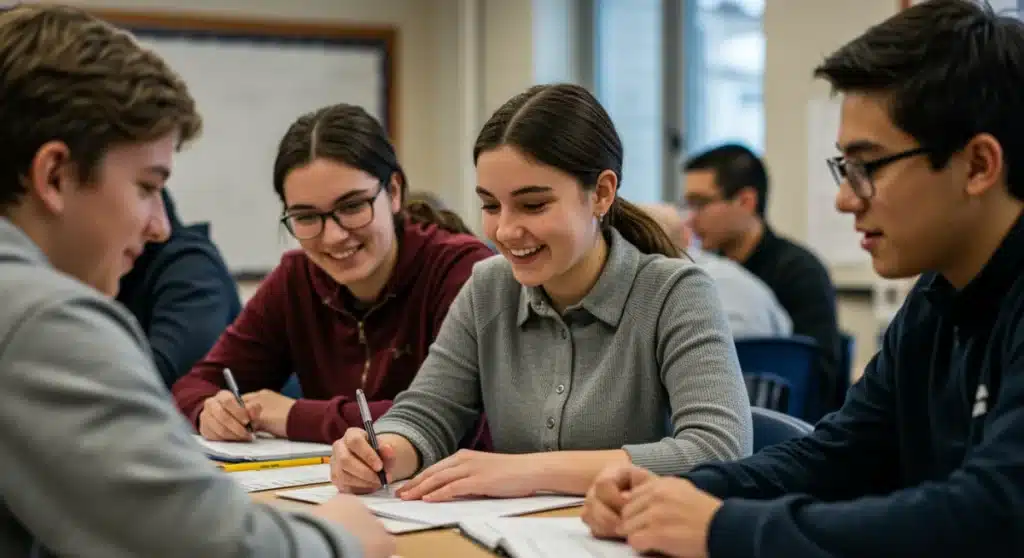
In 2026, the transition from classroom to career is being redefined by a singular focus: “Day-One Readiness.”
As of March 2026, the U.S. education system is responding to a stark reality—only 40% of hiring managers believe standard high school graduates are prepared for the modern workforce.
In response, a transformative shift in secondary curricula has prioritized four specific “Durable Skills” that serve as the new baseline for employability in an AI-integrated economy.
The 2026 academic year marks the nationwide launch of industry-backed programs, such as the AP Career Kickstart courses in Cybersecurity and Business.
These initiatives move beyond rote memorization, focusing instead on verifiable competencies that allow students to graduate with employer-endorsed credentials alongside their diplomas.
Understanding the Evolving Workforce Landscape
The global economy is undergoing profound changes, largely driven by automation, artificial intelligence, and increasing interconnectedness.
This transformation directly impacts the types of roles available and the competencies required to excel in them. High schools are responding proactively to this dynamic environment.
Traditional rote learning is giving way to educational models that emphasize problem-solving, creativity, and critical analysis.
This paradigm shift acknowledges that the jobs of tomorrow will demand more than just factual knowledge; they will require the ability to innovate, adapt, and collaborate effectively. The 2026 job skills outlook reflects this fundamental change.
Educational institutions are recognizing that preparing students for the future means equipping them with a versatile toolkit of skills, not just a static body of knowledge.
This forward-thinking approach ensures graduates are not merely reactive to change but are capable of driving innovation and shaping the future workforce.
The Shift from Rote Learning to Dynamic Skill Acquisition
The transition from memorization-based education to skill-centric learning is a foundational aspect of this new educational philosophy.
Schools are integrating project-based learning and real-world scenarios to foster deeper understanding and practical application of knowledge. This hands-on approach is vital for developing adaptable individuals.
This shift is not just about teaching new subjects but about rethinking how all subjects are taught.
For instance, mathematics might be applied to coding challenges, and history could involve analyzing complex socio-economic systems, all contributing to a more holistic development of skills relevant to the 2026 job skills outlook.
- Emphasis on experiential learning and practical application.
- Integration of interdisciplinary projects across various subjects.
- Focus on developing transferable skills applicable to diverse careers.
Critical Thinking and Problem-Solving Prowess
At the forefront of the emerging job skills is the ability to think critically and solve complex problems.
In an age of information overload, discerning reliable data, analyzing situations from multiple perspectives, and formulating effective solutions are invaluable. High schools are increasingly embedding these competencies into their core curricula.
This involves moving beyond simple memorization to encouraging students to question, evaluate, and synthesize information.
Debate clubs, science fairs, and interdisciplinary projects are just some avenues through which these skills are being honed.
The aim is to cultivate minds that can navigate ambiguity and generate innovative solutions, key features of the 2026 job skills outlook.
The development of critical thinking is not confined to specific subjects; it’s a cross-curricular endeavor.
From analyzing literary texts to dissecting scientific experiments, students are being challenged to think deeply and independently, preparing them for real-world scenarios where quick, informed decisions are often necessary.
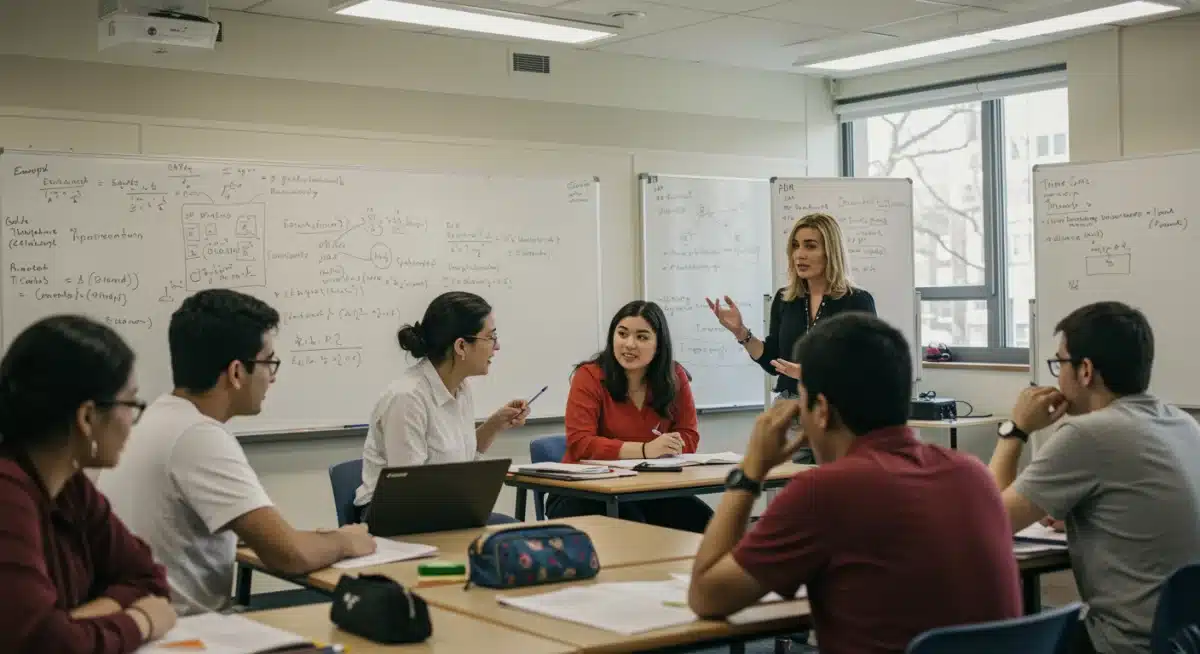
Fostering Analytical Abilities Through Project-Based Learning
Project-based learning (PBL) serves as a potent vehicle for developing critical thinking and problem-solving.
By engaging in long-term, complex projects, students learn to identify problems, research solutions, and present their findings, often collaborating with peers. This mirrors the collaborative problem-solving common in professional environments.
Such projects require students to apply knowledge from various disciplines, manage their time effectively, and overcome obstacles, all while developing a robust analytical framework.
The iterative nature of PBL encourages resilience and adaptability, essential traits highlighted in the 2026 job skills outlook.
- Students identify real-world problems and propose solutions.
- Projects often involve research, data analysis, and presentation skills.
- Collaboration and peer feedback are integral to the learning process.
Digital Literacy and Technological Fluency
In a world increasingly shaped by technology, digital literacy and technological fluency are no longer optional but fundamental.
High schools are recognizing the imperative to equip students with the skills to navigate, utilize, and even create within digital environments. This goes beyond basic computer skills.
It encompasses understanding data privacy, cybersecurity, ethical AI use, and proficiency in various software and hardware applications.
Coding, data analysis, and digital content creation are becoming integral parts of the curriculum, preparing students for a tech-driven future and influencing the 2026 job skills outlook.
The emphasis is on empowering students to be not just consumers of technology but active participants and innovators.
This includes understanding the underlying principles of digital tools, allowing them to adapt to new technologies as they emerge, rather than being limited by specific software knowledge.
Integrating Coding and Data Science into the Curriculum
Many high schools are now introducing coding languages like Python and Java, along with foundational concepts of data science.
These skills are critical for a wide range of careers, from software development to scientific research and business analytics. Early exposure provides a significant advantage.
Beyond specific programming languages, students are learning computational thinking, a problem-solving process that involves breaking down complex problems into smaller, manageable parts.
This analytical approach is transferable to many non-tech fields, making it a universal skill for the 2026 job skills outlook.
- Introduction to programming languages and computational logic.
- Understanding data analysis and interpretation.
- Emphasis on digital citizenship and online safety.
Communication and Collaboration Excellence
Effective communication and strong collaborative skills remain evergreen requirements in any professional setting, and their importance is only growing.
High schools are focusing on developing students’ abilities to articulate ideas clearly, listen actively, and work effectively in diverse teams. These are cornerstone skills for the 2026 job skills outlook.
This includes both written and oral communication, encouraging students to present their ideas persuasively and engage in constructive dialogue.
Group projects, peer reviews, and public speaking opportunities are being utilized to foster these essential interpersonal competencies. The ability to navigate team dynamics is highly valued.
In an increasingly interconnected world, collaboration extends beyond local teams to global partnerships.
Students are being prepared to work with individuals from different backgrounds and cultures, requiring empathy, understanding, and adaptability in their communication styles.
Developing Interpersonal Skills Through Team-Based Projects
Team-based projects are a cornerstone of modern high school education, designed to simulate real-world work environments.
These projects require students to assign roles, manage conflicts, and collectively achieve a common goal. This hands-on experience is invaluable for developing collaborative leadership.
Through these experiences, students learn the nuances of effective teamwork, including delegating tasks, providing constructive feedback, and celebrating collective successes.
Such practical application helps solidify their understanding of collaborative dynamics, a key component of the 2026 job skills outlook.
- Emphasis on active listening and clear articulation of ideas.
- Opportunities for public speaking and formal presentations.
- Learning conflict resolution and negotiation within teams.
Adaptability and Continuous Learning Mindset
Perhaps the most crucial skill for the 21st century, and a significant part of the 2026 job skills outlook, is adaptability coupled with a continuous learning mindset.
The pace of change in industries and technologies means that what is relevant today might be obsolete tomorrow. Graduates must be prepared to learn new skills throughout their careers.
High schools are instilling in students the importance of lifelong learning, encouraging curiosity, resilience, and a proactive approach to acquiring new knowledge.
This involves fostering a growth mindset, where challenges are seen as opportunities for development rather than insurmountable obstacles. The ability to pivot and embrace new methodologies is paramount.
Educators are designing learning environments that encourage experimentation and learning from failure.
By promoting self-directed learning and encouraging students to explore topics outside the traditional curriculum, high schools are cultivating individuals who are intrinsically motivated to continuously expand their skill sets.
Cultivating Resilience and a Growth Mindset
High schools are implementing programs designed to build resilience, teaching students how to cope with setbacks and persevere through challenges.
This emotional intelligence is as vital as academic prowess for long-term success in any field, contributing directly to a positive 2026 job skills outlook.
A growth mindset, the belief that abilities can be developed through dedication and hard work, is actively promoted. This contrasts with a fixed mindset, which assumes abilities are static.
Encouraging students to embrace challenges and learn from criticism helps them become more adaptable and open to new experiences.
- Promoting self-reflection and goal-setting for personal development.
- Encouraging exploration of new subjects and technologies.
- Teaching strategies for managing change and uncertainty.
The Role of Educators in Skill Development
The successful integration of these emerging job skills hinges significantly on the role of educators. Teachers are no longer just disseminators of information but facilitators of learning, mentors, and guides.
Their continuous professional development is crucial to staying abreast of industry trends and pedagogical innovations, shaping the 2026 job skills outlook.
High schools are investing in training programs for teachers, equipping them with the tools and knowledge to incorporate these new skills into their daily lessons.
This includes training in technology integration, project-based learning methodologies, and strategies for fostering critical thinking and collaboration. The entire educational ecosystem must evolve.
Furthermore, educators are tasked with creating inclusive learning environments where every student feels empowered to explore, question, and develop their unique talents.
This supportive atmosphere is essential for nurturing the confidence and intrinsic motivation required for lifelong learning and adaptability.
Professional Development and Curriculum Alignment
Ongoing professional development ensures that teachers are equipped with the latest pedagogical techniques and subject matter expertise.
Workshops on AI literacy, design thinking, and advanced data analysis are becoming commonplace, aligning teaching practices with the demands of the 2026 job skills outlook.
Curriculum committees are actively working to revise and update course content, ensuring that it reflects the most current industry needs and future projections.
This iterative process involves collaboration with industry experts, higher education institutions, and community stakeholders to maintain relevance and rigor.
- Regular training for teachers on emerging technologies and teaching methods.
- Collaborative curriculum development with external experts.
- Emphasis on creating engaging and relevant learning experiences.
Measuring Success and Future Directions
As US high schools prioritize these emerging job skills, the challenge lies in effectively measuring their development and impact.
Standardized tests, while useful for certain academic metrics, may not fully capture the nuances of critical thinking, collaboration, or adaptability. New assessment methods are being explored to gauge student progress accurately.
Performance-based assessments, portfolios, and capstone projects are gaining traction as ways to evaluate students’ ability to apply complex skills in real-world contexts.
These methods offer a more holistic view of student capabilities, moving beyond mere recall to demonstrate true mastery, aligning with the 2026 job skills outlook.
Looking ahead, the commitment to these emerging skills will require continuous evaluation and adaptation.
Educational leaders will need to stay responsive to feedback from employers, higher education, and, most importantly, the students themselves, to ensure that high school education remains relevant and impactful for future generations.
| Key Skill | Brief Description |
|---|---|
| Critical Thinking | Analyzing information, solving complex problems, and making informed decisions. |
| Digital Literacy | Proficiency in technology, data, coding, and cybersecurity fundamentals. |
| Communication & Collaboration | Effective oral/written expression and teamwork in diverse settings. |
| Adaptability & Learning | Embracing change, continuous learning, and resilience in new situations. |
Frequently Asked Questions About 2026 Job Skills Outlook
These skills are prioritized because they are highly transferable and increasingly demanded across various industries due to rapid technological advancements and global economic shifts. They prepare students not just for current jobs but for future roles that may not even exist yet, ensuring long-term adaptability and success.
High schools are integrating these skills through project-based learning, interdisciplinary courses, and dedicated programs in areas like coding and data science. They are also fostering a culture of collaboration, critical thinking, and continuous learning across all subjects, shifting from rote memorization to practical application.
Parents can support by encouraging curiosity, fostering a growth mindset, and providing opportunities for problem-solving at home. Discussing current events, engaging in creative projects, and supporting digital literacy initiatives can significantly reinforce what students learn in school, aligning with the 2026 job skills outlook.
No, traditional subjects remain crucial. Instead, the focus is on integrating these emerging skills within existing subjects, making them more relevant and engaging. For example, math can be applied to data analysis, and literature can hone critical thinking and communication, enhancing the overall educational experience for the 2026 job skills outlook.
These skills provide a strong foundation for both higher education and diverse career paths. Universities value students who can think critically, collaborate, and adapt. Employers seek individuals with digital fluency and problem-solving abilities. This holistic preparation ensures graduates are competitive and well-rounded for their next steps.
Looking Ahead: Shaping Future Success
The prioritization of these four emerging job skills by US high schools marks a significant and necessary evolution in education.
In conclusion, this forward-thinking approach directly addresses the dynamic demands of the 2026 job skills outlook, ensuring that graduates are not just academically proficient but also equipped with the practical competencies essential for navigating complex professional landscapes.
The continuous adaptation of curricula and teaching methodologies will be key to maintaining this momentum.
This commitment to developing critical thinking, digital literacy, communication, collaboration, and adaptability underscores a proactive stance against future uncertainties.
As technology continues to advance and global markets shift, the ability of individuals to learn, innovate, and contribute meaningfully will define their success.
High schools are laying the groundwork for a resilient and capable future workforce. For students, understanding and embracing these skills means a greater chance of career fulfillment and economic stability.
For the nation, it means a workforce ready to drive innovation and maintain competitiveness on a global stage.
The ongoing focus on these critical areas will undoubtedly shape the educational and professional trajectories for years to come, confirming the importance of the 2026 job skills outlook.
This urgency is underscored by the fact that few hiring managers think high school grads are currently ready for the workforce.