Apprenticeships Rise: US Workforce Training Redefined by 2026
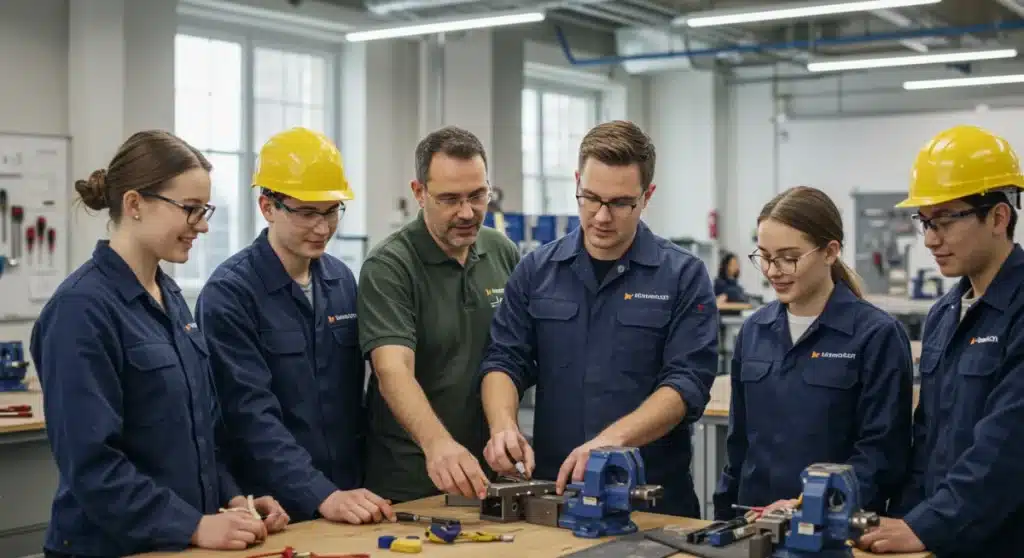
In 2026, the American workforce is undergoing a structural realignment as the “degree-only” path faces increasing scrutiny.
The US Apprenticeship Growth 2026 is not just an expansion of traditional trades; it is a sophisticated evolution into high-tech and white-collar sectors like AI infrastructure, cybersecurity, and healthcare.
With the U.S. Department of Labor recently announcing $145 million in funding to support performance-based Registered Apprenticeships, the federal goal is to surpass 1 million active apprentices nationwide.
This push is fueled by a “skills-first” hiring trend, where nearly 70% of employers now prioritize demonstrated competencies over prestige alone.
Understanding the Surge: Why Apprenticeships are Thriving
The remarkable surge in apprenticeships across the United States is not a mere trend but a strategic imperative driven by several key factors.
Companies are increasingly recognizing the limitations of traditional recruitment methods in providing candidates with the specific, hands-on skills required for modern roles.
This realization has catalyzed a renewed focus on structured training programs that combine classroom instruction with practical, on-the-job experience.
Economic shifts, rapid technological advancements, and a persistent skills gap have created an urgent need for adaptable and highly skilled workers.
Apprenticeships offer a direct and efficient solution, enabling businesses to cultivate talent tailored to their unique operational needs while providing individuals with invaluable experience and a clear career trajectory.
This symbiotic relationship is fueling the expansion of these programs nationwide.
Furthermore, government initiatives and increased funding support have significantly bolstered the appeal and accessibility of apprenticeships.
Policy changes and incentives are encouraging more companies to invest in these programs, while also raising public awareness about the benefits of vocational training.
The convergence of these factors is firmly establishing apprenticeships as a cornerstone of future workforce development.
Addressing the Skills Gap with Practical Training
The widening skills gap remains a critical challenge for many US industries, particularly in sectors such as advanced manufacturing, IT, healthcare, and clean energy.
Traditional educational pathways often struggle to keep pace with the rapid evolution of industry demands, leading to a disconnect between available talent and employer needs.
Apprenticeships directly address this by combining theoretical knowledge with immediate practical application.
By immersing individuals in real-world work environments, apprenticeships ensure that trainees acquire job-specific competencies and soft skills essential for success.
This hands-on approach reduces the time and cost associated with onboarding new hires, as apprentices are productive from day one and integrate seamlessly into the company culture.
It’s a proactive strategy to build a skilled workforce from within.
Economic Benefits for Companies and Individuals
- Companies gain access to a pipeline of loyal, highly skilled workers tailored to their specific needs.
- Reduced recruitment costs and increased retention rates due to invested training.
- Apprentices earn a wage while learning, avoiding significant student debt and gaining valuable experience.
- Higher earning potential for apprentices upon completion, often leading to better career progression.
The economic advantages of apprenticeships extend broadly, benefiting both the participating companies and the individuals enrolled in the programs.
For businesses, apprenticeships represent a cost-effective method for talent development, often yielding a significant return on investment through increased productivity and reduced turnover.
The ability to shape future employees from the ground up ensures a workforce perfectly aligned with organizational goals.
For individuals, apprenticeships provide a debt-free pathway to a stable and rewarding career. Earning a living wage while acquiring valuable skills and credentials is a powerful incentive, making professional growth accessible to a broader demographic.
This dual benefit contributes significantly to local economies and national prosperity, reinforcing why the US Apprenticeship Growth 2026 is so critical.
Innovative Models: How US Companies are Adapting
US companies are not merely increasing the number of apprenticeships; they are also innovating in how these programs are structured and delivered.
Traditional models are being reimagined to suit the demands of the 21st-century economy, incorporating hybrid learning, digital tools, and partnerships with educational institutions and industry consortia.
This adaptability is crucial for maintaining relevance and effectiveness.
From tech giants to small manufacturing firms, businesses are customizing apprenticeship pathways to address highly specialized skill sets that are in high demand.
This includes developing programs for emerging fields like artificial intelligence, cybersecurity, and renewable energy, ensuring that the workforce is prepared for future industry needs. The focus is on agility and responsiveness to market changes.
These innovative models often emphasize competency-based progression, allowing apprentices to advance at their own pace as they master essential skills, rather than adhering to rigid timelines.
This flexible approach maximizes learning outcomes and ensures that apprentices are fully prepared for their roles upon completion. The adaptiveness of these programs is a key driver for the continued US Apprenticeship Growth 2026.
Digital Apprenticeships and Hybrid Learning
The integration of digital technologies has revolutionized apprenticeship delivery, making programs more accessible and efficient.
Online learning platforms, virtual reality simulations, and remote mentorship allow apprentices to acquire theoretical knowledge and practice skills in diverse settings. This hybrid approach caters to a wider range of learners and geographical locations.
Digital apprenticeships are particularly vital for technology-driven sectors, where rapid updates and continuous learning are paramount.
These programs leverage cutting-edge tools to provide immersive training experiences, ensuring that apprentices are proficient in the latest software and hardware.
The flexibility of hybrid models also supports individuals with varying schedules and commitments.
Collaborative Partnerships Driving Expansion
 The expansion of apprenticeships is significantly bolstered by robust collaborations between companies, educational institutions, and government agencies.
These partnerships facilitate the development of standardized curricula, shared resources, and broader outreach, ensuring that programs are high-quality and widely available.
Industry consortia play a crucial role in defining skill requirements and certifying competencies.
Community colleges and vocational schools often serve as foundational partners, providing the academic component of hybrid programs and helping to recruit diverse talent.
Government bodies offer funding, regulatory support, and advocacy, creating an ecosystem conducive to apprenticeship growth. This collaborative effort ensures that the US Apprenticeship Growth 2026 continues its positive trajectory.
- Industry leaders partner with educators to design relevant, up-to-date curricula.
- Government grants and tax incentives encourage business participation in apprenticeship programs.
- Non-profit organizations provide support services, mentorship, and career guidance for apprentices.
- Local workforce boards connect job seekers with apprenticeship opportunities.
Key Sectors Leading the Apprenticeship Revolution
Several key sectors are at the forefront of the apprenticeship revolution, demonstrating significant investment and innovation in workforce training.
These industries, facing acute talent shortages and rapid technological shifts, have embraced apprenticeships as a strategic solution for building a highly skilled and adaptable workforce.
Their success stories are inspiring broader adoption across the American economy.
Advanced manufacturing, information technology, healthcare, and the skilled trades continue to be major drivers of apprenticeship growth.
These sectors require specialized expertise that is often best acquired through hands-on experience and structured mentorship. The commitment of these industries is a crucial factor in achieving the projected US Apprenticeship Growth 2026.
Beyond these traditional areas, emerging sectors like renewable energy, biotechnology, and artificial intelligence are also increasingly turning to apprenticeships to cultivate their future talent.
This diversification highlights the versatility and effectiveness of the apprenticeship model across a wide spectrum of economic activities, ensuring its continued relevance.
Advanced Manufacturing and Skilled Trades
The manufacturing sector, experiencing a resurgence due to automation and digitalization, relies heavily on a highly skilled workforce capable of operating complex machinery and implementing advanced processes.
Apprenticeships in this domain cover a wide range of roles, from machinists and welders to robotics technicians and quality control specialists. These programs are vital for maintaining competitiveness.
Similarly, the skilled trades, encompassing electricians, plumbers, carpenters, and HVAC technicians, have long utilized apprenticeships as their primary training model.
The demand for these professionals remains consistently high, and apprenticeships provide a reliable pipeline of qualified workers. These foundational sectors are critical to the overall US Apprenticeship Growth 2026.
Information Technology and Healthcare
The IT sector, characterized by rapid innovation and a constant demand for new skills, has increasingly embraced apprenticeships to train cybersecurity analysts, software developers, data scientists, and network engineers.
These programs offer a practical pathway into high-paying tech careers, often bypassing the need for a traditional four-year degree. Companies like IBM and Microsoft have developed robust tech apprenticeship initiatives.
In healthcare, apprenticeships are addressing shortages in critical support roles, such as medical assistants, surgical technologists, and registered nurses.
These programs combine clinical rotations with academic instruction, preparing individuals for vital roles in patient care.
The growth in these sectors is a significant contributor to the overall US Apprenticeship Growth 2026, providing essential services to communities.
Government Support and Policy Impact
Government support and favorable policy initiatives have played a pivotal role in accelerating the expansion of apprenticeships across the United States.
Federal and state governments have recognized the strategic importance of these programs in strengthening the national workforce and addressing economic disparities.
This commitment is manifested through funding, regulatory frameworks, and promotional efforts.
The Department of Labor, alongside various state agencies, has invested significantly in grants and technical assistance to expand registered apprenticeship programs.
These efforts aim to streamline the process for employers to establish new programs and to increase awareness among potential apprentices. The alignment of government and industry objectives is a powerful catalyst for growth.
Policy changes have also made it easier for different industries to adopt apprenticeship models, including those in non-traditional fields.
This regulatory flexibility, combined with financial incentives, is encouraging a broader spectrum of companies to participate, further driving the US Apprenticeship Growth 2026. The impact of these policies is felt across all layers of the economy.
Federal and State Initiatives
Federal programs, such as the Workforce Innovation and Opportunity Act (WIOA), provide critical funding and support for apprenticeship development.
These initiatives help states and local communities build their capacity to implement and scale effective programs.
The focus is on creating pathways for diverse populations, including underrepresented groups and veterans, to access high-quality training.
Many states have also implemented their own apprenticeship expansion strategies, offering tax credits to employers, developing state-specific registration processes, and establishing apprenticeship offices.
These coordinated efforts ensure a consistent and supportive environment for apprenticeship growth nationwide. The synergy between federal and state policies is vital for sustained US Apprenticeship Growth 2026.
Funding Mechanisms and Incentives
 Various funding mechanisms and incentives are designed to encourage businesses to invest in apprenticeships. These include direct grants for program development, wage subsidies for apprentices, and tax credits for employers.
Such financial support helps offset the initial costs of training, making apprenticeships a more attractive and viable option for companies of all sizes.
Beyond direct financial aid, incentives also include technical assistance for curriculum development, access to national apprenticeship standards, and marketing support to promote programs.
These comprehensive offerings reduce barriers to entry for employers and ensure the quality and effectiveness of apprenticeship initiatives, contributing significantly to the US Apprenticeship Growth 2026.
- Government grants provide seed funding for new apprenticeship programs.
- Tax credits reduce the financial burden on companies investing in training.
- Wage subsidies help employers cover apprentice salaries during the training period.
- Technical assistance ensures programs meet national quality standards.
Benefits for the Future Workforce and Economy
The sustained growth of apprenticeships holds profound benefits for both the future American workforce and the broader economy.
By equipping individuals with in-demand skills and providing clear career progression, apprenticeships foster a more resilient, adaptable, and productive labor force.
This directly translates into enhanced economic competitiveness and innovation on a national scale.
Apprenticeships also play a crucial role in promoting economic equity by offering accessible pathways to high-wage jobs for individuals who may not pursue traditional four-year degrees.
This democratizes opportunity and helps reduce income disparities, strengthening communities across the country. The long-term societal impact of the US Apprenticeship Growth 2026 cannot be overstated.
Furthermore, a skilled workforce is a magnet for investment and economic development. Companies are more likely to establish or expand operations in regions with a readily available talent pool, creating a virtuous cycle of growth and prosperity.
The continued emphasis on apprenticeships is therefore a strategic investment in America’s future economic health.
Boosting Productivity and Innovation
Apprenticeships cultivate a workforce that is not only skilled but also deeply integrated into company culture and processes.
This leads to higher productivity, as employees are trained to meet specific organizational needs and are often more engaged and loyal.
The hands-on learning approach also fosters a problem-solving mindset, driving internal innovation and continuous improvement within businesses.
By investing in the development of their own talent, companies can stay ahead of technological changes and market demands.
Apprentices bring fresh perspectives and are often quick to adopt new tools and methodologies, contributing to a dynamic and forward-thinking work environment.
This continuous cycle of learning and application is essential for sustained economic growth and innovation, reflecting the importance of the US Apprenticeship Growth 2026.
Creating Diverse and Inclusive Career Pathways
Apprenticeships are powerful tools for creating more diverse and inclusive career pathways.
They remove barriers often associated with traditional education, such as high tuition costs and exclusionary hiring practices, making high-quality job training accessible to a broader demographic.
This includes individuals from underserved communities, women entering non-traditional fields, and veterans transitioning to civilian careers.
By emphasizing skills and competencies over formal degrees, apprenticeships open doors for talented individuals who might otherwise be overlooked.
This not only enriches the workforce with varied perspectives but also helps companies build teams that reflect the diversity of their customer base.
This commitment to inclusivity is a cornerstone of the US Apprenticeship Growth 2026, fostering a more equitable society.
Challenges and Opportunities for Continued Growth
While the trajectory for apprenticeships in the US is overwhelmingly positive, several challenges and opportunities exist for continued growth.
Addressing these will be crucial to ensuring that the projected 15% increase by 2026 is met and sustained beyond that timeframe. Navigating these complexities requires ongoing collaboration and strategic planning among all stakeholders.
One primary challenge lies in scaling programs effectively across diverse industries and geographical regions, ensuring quality and consistency.
Another involves raising broader awareness and dispelling misconceptions about apprenticeships, particularly among students, parents, and guidance counselors. Overcoming these hurdles will unlock even greater potential for workforce development.
However, these challenges also present significant opportunities for innovation in program design, outreach strategies, and policy refinements.
By leveraging data, technology, and strong partnerships, the apprenticeship ecosystem can evolve to meet future demands, solidifying its role as a cornerstone of American workforce training.
The future of US Apprenticeship Growth 2026 hinges on proactive engagement.
Scaling Programs and Quality Assurance
Scaling apprenticeship programs while maintaining high standards of quality is a complex undertaking.
As more companies and sectors adopt apprenticeships, there is a need for robust infrastructure to support program development, registration, and oversight.
Ensuring that all programs meet established standards for instruction, mentorship, and safety is paramount to their long-term success and credibility.
Developing standardized frameworks and best practices, alongside flexible adaptation for specific industry needs, is essential.
Investing in training for mentors and program administrators also supports quality assurance, ensuring that apprentices receive effective guidance and instruction. Successful scaling is key to realizing the full potential of the US Apprenticeship Growth 2026.
Increasing Awareness and Changing Perceptions
Despite their proven benefits, apprenticeships still face perception challenges in some quarters, often viewed as second-tier options compared to traditional four-year college degrees.
A significant opportunity lies in proactive communication and marketing campaigns to highlight the value, career potential, and economic advantages of apprenticeship pathways. Educating students, parents, and educators is crucial.
Showcasing successful apprentice stories, emphasizing the high earning potential and career progression, and demonstrating the direct link to in-demand jobs can shift public perception.
By repositioning apprenticeships as a premier pathway to professional success, broader adoption and interest can be cultivated, further fueling the US Apprenticeship Growth 2026 trend.
The Role of Technology in Modern Apprenticeships
Technology is playing an increasingly transformative role in modern apprenticeships, enhancing every aspect from recruitment and training to assessment and program management.
Digital tools are making apprenticeships more efficient, accessible, and responsive to the dynamic needs of industries. This integration is crucial for the continued evolution and effectiveness of these programs.
From virtual reality (VR) and augmented reality (AR) simulations that provide immersive training experiences to AI-powered platforms that personalize learning paths, technology is enabling apprentices to acquire complex skills in a safe and engaging environment.
These innovations are breaking down geographical barriers and making high-quality training available to a broader audience.
Furthermore, data analytics and learning management systems (LMS) are providing invaluable insights into apprentice progress and program effectiveness.
This allows for continuous improvement and customization, ensuring that apprenticeships remain cutting-edge and relevant in a rapidly changing world. The embrace of technology is a defining characteristic of the US Apprenticeship Growth 2026.
Virtual and Augmented Reality for Training
Virtual reality (VR) and augmented reality (AR) technologies are revolutionizing the way apprentices learn and practice new skills.
These immersive tools allow trainees to experience real-world scenarios in a safe, controlled environment, reducing risks and accelerating learning.
For example, aspiring electricians can practice wiring complex circuits in VR, while healthcare apprentices can perform simulated surgical procedures.
AR applications can overlay digital information onto physical objects, providing on-the-job guidance and enhancing troubleshooting capabilities.
This hands-on, interactive approach boosts engagement and retention, making complex tasks more manageable.
The adoption of VR/AR is a significant factor in the innovation driving the US Apprenticeship Growth 2026, preparing a highly competent workforce.
AI and Data Analytics for Personalized Learning
Artificial intelligence (AI) and data analytics are enabling more personalized and adaptive apprenticeship programs.
AI-powered platforms can assess an apprentice’s strengths and weaknesses, then tailor learning modules and resources to their individual needs and pace.
This ensures that training is highly efficient and maximally effective, optimizing learning outcomes for every participant.
Data analytics provides program administrators with insights into curriculum effectiveness, mentor performance, and apprentice progression.
This allows for evidence-based decision-making and continuous program improvement, ensuring that apprenticeships remain relevant and impactful.
The intelligent use of data is vital for supporting the sustained US Apprenticeship Growth 2026, fostering a smarter approach to workforce development.
Future Outlook: Sustaining Momentum Beyond 2026
As the United States approaches the projected 15% growth in apprenticeships by 2026, the focus is increasingly shifting towards sustaining this momentum and ensuring long-term success.
The initiatives currently in place are laying a robust foundation, but continuous adaptation and strategic planning will be essential to keep apprenticeships at the forefront of workforce development well into the future.
This requires a forward-looking perspective from all stakeholders.
Sustaining momentum involves not only expanding the number of programs but also deepening their quality, broadening their reach into new industries, and ensuring they remain responsive to evolving economic and technological landscapes.
The lessons learned during this period of significant growth will be invaluable in shaping future policies and investment strategies for workforce training. The future of US Apprenticeship Growth 2026 looks promising.
Ultimately, the long-term success of apprenticeships will depend on their ability to consistently deliver value for both employers and individuals, adapting to new challenges and seizing emerging opportunities.
This commitment to continuous improvement and innovation will solidify their role as a cornerstone of American economic resilience and social mobility for decades to come.
Expanding Reach into New and Emerging Industries
A key aspect of sustaining growth beyond 2026 will be the strategic expansion of apprenticeships into new and emerging industries.
While traditional sectors have led the charge, future opportunities lie in areas such as green energy, biotechnology, advanced robotics, and even creative industries.
Developing tailored apprenticeship models for these fields will be critical for future talent pipelines.
This expansion requires proactive engagement with emerging industry leaders to identify skill needs and co-create relevant training programs.
Government and educational institutions will play a vital role in facilitating these new partnerships and providing the necessary infrastructure for diverse apprenticeship growth.
This forward-thinking approach is crucial for maintaining the positive trajectory of US Apprenticeship Growth 2026.
Continuous Adaptation and Policy Evolution
The dynamic nature of the global economy necessitates continuous adaptation of apprenticeship programs and policies.
Regular reviews of curriculum, training methodologies, and regulatory frameworks will ensure that apprenticeships remain relevant and effective.
Policy evolution should aim to reduce bureaucratic hurdles, increase funding flexibility, and promote innovation in program design.
Furthermore, fostering a culture of lifelong learning within apprenticeship models will be essential.
This includes incorporating mechanisms for upskilling and reskilling throughout an individual’s career, allowing them to remain competitive in a rapidly changing job market.
This commitment to responsiveness and ongoing development is key to the enduring legacy of the US Apprenticeship Growth 2026.
| Key Aspect | Description |
|---|---|
| Projected Growth | US apprenticeships expected to grow by 15% by 2026. |
| Driving Factors | Skills gap, technological advancement, and government support. |
| Key Sectors | IT, healthcare, advanced manufacturing, and skilled trades. |
| Future Outlook | Sustained growth through innovation and policy evolution. |
Frequently Asked Questions About US Apprenticeship Growth
The growth is primarily driven by the need to address persistent skill gaps in various industries, rapid technological advancements, and robust government support through funding and policy initiatives. Companies are seeking practical, hands-on training solutions to cultivate specialized talent.
Key sectors include information technology, healthcare, advanced manufacturing, and the traditional skilled trades. Emerging fields like green energy and artificial intelligence are also increasingly adopting apprenticeship models to build their future workforce and secure talent.
Individuals gain paid work experience, acquire in-demand skills, earn industry-recognized credentials, and often avoid significant student debt. Apprenticeships provide a direct pathway to stable, high-wage careers with excellent opportunities for professional advancement.
Companies are adopting hybrid learning models, integrating digital tools like VR/AR for training, and leveraging AI for personalized learning paths. They are also forming stronger partnerships with educational institutions and industry consortia to enhance program quality and reach.
Challenges include scaling programs effectively while maintaining quality, increasing public awareness to change perceptions, and ensuring continuous adaptation of programs to evolving industry needs. Overcoming these will be crucial for sustained momentum beyond 2026.
Perspectives
The projected US Apprenticeship Growth 2026 signifies a pivotal moment for American workforce development, emphasizing practical skills and career readiness.
This trend highlights a strategic shift by companies to build talent pipelines aligned with future demands, supported by evolving government policies and technological advancements.
What emerges is a more resilient and equitable labor market, offering clear pathways to prosperity for a broader range of individuals.
As traditional institutions seek to remain relevant in this changing environment, the collaboration between academia and industry is intensifying.
To understand how universities are adapting to this model, you can explore the recent report on the rise of degree apprenticeships.