2026 Fed Rate Forecasts: 3 Key Changes Impacting US Economy
Latest developments on 2026 Federal Reserve interest rate forecasts, with key facts, verified sources, and what readers need to monitor next in the U.S. economy. This update prioritizes what changed, why it matters, and what to watch next, presented clearly and objectively.
The landscape of monetary policy is constantly evolving, and understanding the trajectory of interest rates is paramount for businesses and consumers alike. As we approach the mid-point of the decade, the 2026 Fed Rate Forecasts are drawing significant attention, with new projections offering crucial insights into the future of the U.S. economy.
This report delves into the anticipated shifts and their potential implications, providing a clear and objective analysis for our readers.
Recent statements from Federal Reserve officials and analysis from leading financial institutions indicate a refined outlook for interest rates in the coming years. These forecasts are not merely academic exercises; they directly influence borrowing costs, investment decisions, and overall economic stability.
We aim to break down these complex predictions into understandable components, highlighting what truly matters for your financial planning.
Our focus today is on three pivotal changes within the 2026 Fed Rate Forecasts that are expected to define economic conditions this quarter and beyond. These adjustments stem from evolving inflation data, labor market dynamics, and global economic pressures, each playing a critical role in shaping the Federal Reserve’s strategy. Understanding these elements is key to navigating the economic currents ahead.
Understanding the Federal Reserve’s Mandate and Forecasting Tools
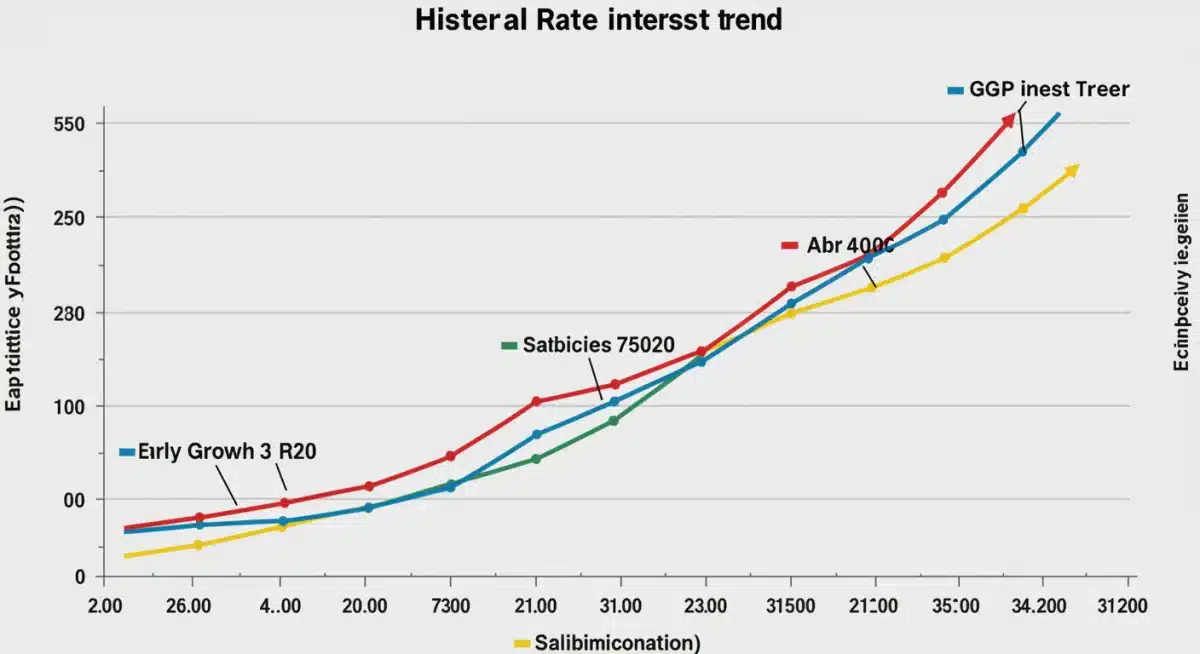
The Federal Reserve operates under a dual mandate: to foster maximum employment and maintain price stability. These objectives guide its decisions on interest rates, primarily through adjustments to the federal funds rate, which influences other borrowing costs throughout the economy.
Forecasting interest rates involves sophisticated models that analyze a vast array of economic data, including inflation metrics, GDP growth, employment figures, and global economic trends. These models are continuously updated, reflecting new information and shifting economic realities, which directly impacts the 2026 Fed Rate Forecasts.
The Fed’s projections, often released through the Summary of Economic Projections (SEP), offer a glimpse into policymakers’ expectations for key economic variables. While these are not guarantees, they provide valuable guidance for market participants and the public, shaping expectations around the future of monetary policy.
Key Change 1: Shifting Inflation Expectations and Policy Response
One of the most significant changes influencing the 2026 Fed Rate Forecasts is the evolving outlook on inflation. Recent data suggests a more persistent, albeit moderating, inflationary environment than previously anticipated, prompting a recalibration of the Fed’s potential policy path.
Originally, many anticipated a swifter return to the Fed’s 2% inflation target, allowing for earlier and more aggressive rate cuts. However, supply chain resilience, robust consumer demand, and geopolitical factors have kept price pressures elevated, leading to a more cautious approach from policymakers.
This shift implies that interest rates may remain higher for longer than initially projected, impacting everything from mortgage rates to corporate borrowing costs. The Fed’s commitment to price stability means it is prepared to maintain a restrictive stance until there is clear evidence of sustainable disinflation towards its target.
The Impact of Core Inflation Metrics
The Federal Reserve pays close attention to core inflation measures, which exclude volatile food and energy prices, to gauge underlying price trends. Persistent strength in these core indicators is a primary driver behind the revised 2026 Fed Rate Forecasts, signaling continued vigilance from the central bank.
Policy decisions are heavily influenced by the trajectory of these core metrics. If they decelerate more slowly than expected, the Fed will likely maintain higher rates, impacting various sectors of the U.S. economy for an extended period.
- Wage growth: Strong wage growth, while beneficial for workers, can contribute to inflationary pressures if not offset by productivity gains.
- Service sector inflation: Prices in the service sector have shown particular stickiness, posing a challenge for the Fed’s disinflation efforts.
- Global commodity prices: Fluctuations in global energy and food markets can spill over, affecting domestic inflation despite core measures.
Key Change 2: Dynamics of the Labor Market and Employment Targets
The U.S. labor market has demonstrated remarkable resilience, often defying expectations of a significant slowdown. This robust employment picture is another critical factor reshaping the 2026 Fed Rate Forecasts, as the Fed balances its dual mandate.
While a strong labor market is generally positive, an exceptionally tight market can contribute to inflationary pressures through wage-price spirals. The Fed is carefully monitoring employment figures, including unemployment rates, job openings, and wage growth, to assess their impact on the broader economy.
The latest projections suggest that while the labor market may cool slightly, it is unlikely to experience a sharp contraction. This scenario provides the Fed with flexibility but also necessitates a careful calibration of monetary policy to avoid overheating the economy while still achieving maximum employment.
Unemployment Rate Projections
The Federal Reserve’s forecasts for the unemployment rate in 2026 are crucial indicators of its confidence in the labor market’s health. A slightly higher, yet still historically low, unemployment rate is often seen as a sign of a more balanced labor market, reducing inflationary pressures.
Current projections indicate a modest increase in the unemployment rate, suggesting a gradual cooling rather than a sharp downturn. This outlook influences the Fed’s willingness to adjust interest rates, aiming to achieve a soft landing for the economy.
- Job openings: A decline in job openings, while still elevated, suggests a rebalancing of labor supply and demand.
- Labor force participation: Changes in labor force participation rates can impact the tightness of the labor market and wage pressures.
- Sectoral employment: Disparities in employment growth across different sectors can provide insights into underlying economic strengths and weaknesses.
Key Change 3: Global Economic Headwinds and Geopolitical Influences
The U.S. economy does not operate in isolation; global economic conditions and geopolitical developments significantly impact domestic monetary policy. The 2026 Fed Rate Forecasts are increasingly incorporating these external factors, recognizing their potential to influence inflation and growth.
Slowdowns in major global economies, ongoing supply chain disruptions, and escalating geopolitical tensions can all exert pressure on the U.S. economic outlook. These factors can either exacerbate inflationary pressures or dampen demand, requiring the Fed to adapt its strategy accordingly.
Policymakers are closely watching international trade flows, currency movements, and energy markets for signs of broader economic shifts. The interconnectedness of the global economy means that external shocks can quickly translate into domestic challenges, influencing the path of interest rates.
Impact of International Trade and Supply Chains
Disruptions to international trade and global supply chains have been a recurring theme in recent years, contributing to inflationary pressures. The Federal Reserve’s 2026 Fed Rate Forecasts account for the potential for these issues to persist or re-emerge, influencing the cost of goods and services.
Persistent bottlenecks or trade disputes could necessitate a more hawkish stance from the Fed to combat imported inflation. Conversely, a normalization of global trade could ease price pressures, providing more room for policy flexibility.
The ongoing assessment of these external factors is critical for the Fed’s decision-making process. Their influence extends beyond immediate price impacts, affecting business investment, consumer confidence, and overall economic stability in the U.S. and globally.
Implications for Businesses and Consumers in the U.S.
The recalibrated 2026 Fed Rate Forecasts carry significant implications for various segments of the U.S. economy. Businesses face altered borrowing costs, affecting investment in expansion, equipment, and hiring. Companies reliant on debt financing will need to adjust their capital expenditure plans accordingly.
For consumers, these forecasts translate into direct impacts on mortgages, auto loans, and credit card interest rates. Higher interest rates mean increased monthly payments for new loans and potentially higher costs for variable-rate debt, influencing purchasing power and discretionary spending.
The housing market, in particular, is sensitive to interest rate changes. Sustained higher rates could cool demand further, affecting home sales, construction, and property values. Understanding these dynamics is crucial for both buyers and sellers in the coming quarters.
Sector-Specific Economic Impacts
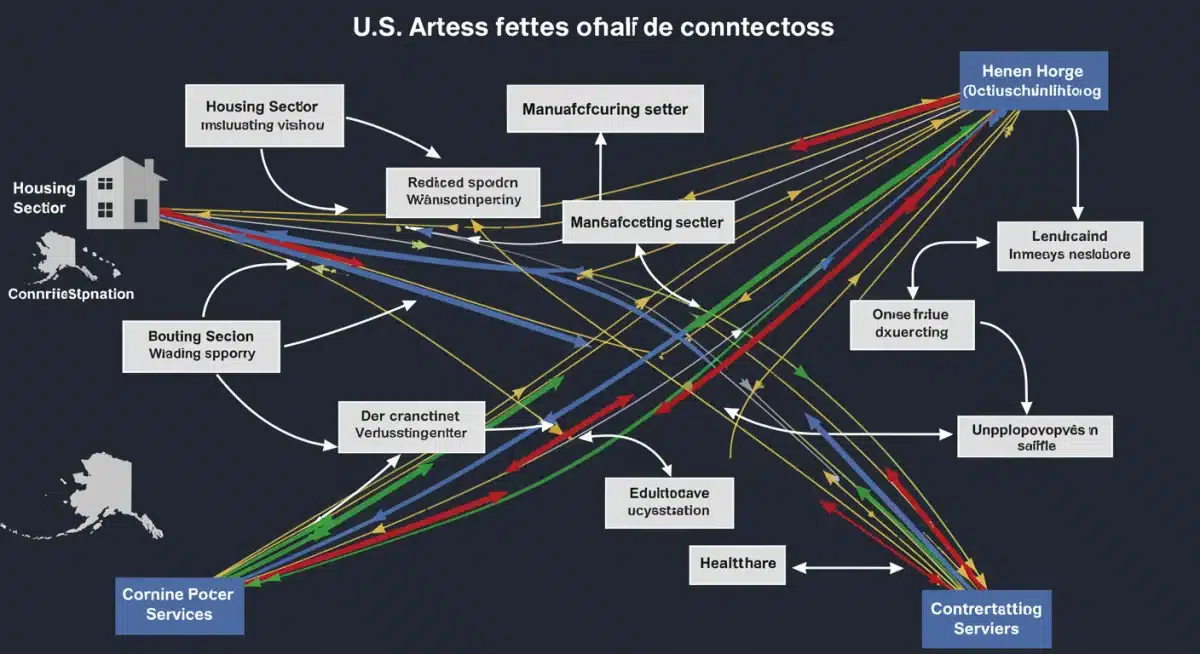
Different sectors of the economy will experience the effects of the 2026 Fed Rate Forecasts in varying ways. Interest-sensitive sectors, such as real estate and automobiles, are likely to feel a more direct and immediate impact from higher borrowing costs.
Conversely, sectors less reliant on consumer credit or large capital investments may be relatively insulated. However, a general slowdown in economic activity due to higher rates could eventually affect all industries, albeit to different degrees.
Financial institutions, including banks and credit unions, will also navigate a changing landscape. Higher rates can increase their net interest margins but also pose risks related to loan defaults and reduced demand for new credit products. The overall economic environment demands careful strategic planning.
Expert Analysis and Market Reactions to the New Forecasts
Financial analysts and economists are carefully dissecting the revised 2026 Fed Rate Forecasts, offering diverse perspectives on their potential outcomes. Many agree that the Fed’s commitment to fighting inflation remains firm, even if it means a prolonged period of higher interest rates.
Market reactions to these forecasts have been varied, with some sectors adjusting more quickly than others. Equity markets typically react to changes in future earnings expectations, while bond yields directly reflect anticipated interest rate movements. Volatility often accompanies shifts in monetary policy outlook.
According to several leading economists, the Fed’s communication strategy will be crucial in managing market expectations and avoiding undue economic disruption. Clear guidance on data dependency and policy objectives can help stabilize financial markets amidst evolving forecasts.
Preparing for Economic Shifts
Businesses and individuals are advised to review their financial strategies in light of the updated 2026 Fed Rate Forecasts. This includes reassessing debt portfolios, investment plans, and cash flow management to adapt to a potentially higher-for-longer interest rate environment.
For consumers, this could mean prioritizing debt reduction or locking in fixed-rate loans where appropriate. For businesses, it might involve optimizing operational efficiencies and exploring alternative financing options to mitigate the impact of increased borrowing costs.
Proactive planning and staying informed about ongoing economic developments will be essential for navigating the complexities introduced by these revised rate forecasts. The ability to adapt quickly to changing economic conditions will be a key differentiator.
| Key Point | Brief Description |
|---|---|
| Inflation Outlook | More persistent inflation suggests higher rates for longer in 2026 Fed Rate Forecasts. |
| Labor Market Resilience | Strong employment influences Fed’s cautious approach to rate adjustments. |
| Global Economic Factors | Geopolitical and trade issues increasingly shape domestic monetary policy. |
| Economic Impact | Affects borrowing costs, investment, and consumer spending across sectors. |
Frequently Asked Questions About 2026 Fed Rate Forecasts
The primary drivers include more persistent inflation data, particularly in core services, the continued resilience of the U.S. labor market, and the influence of global economic conditions and geopolitical events. These factors collectively inform the Federal Reserve’s cautious monetary policy stance.
These forecasts directly impact consumers through higher interest rates on mortgages, auto loans, and credit cards. This can lead to increased borrowing costs, affecting purchasing power and potentially slowing down big-ticket purchases. It underscores the importance of managing personal debt effectively.
Yes, the Federal Reserve remains committed to its 2% inflation target. While the path to achieving it might be longer due to current economic conditions, the target itself has not changed. The 2026 Fed Rate Forecasts reflect the Fed’s strategy to reach this goal sustainably.
A strong labor market can contribute to inflationary pressures through wage growth. The Fed monitors employment figures closely to ensure that the labor market remains healthy without overheating, which is a key consideration in the 2026 Fed Rate Forecasts to balance employment and price stability.
Businesses should evaluate their debt structures, investment plans, and operational efficiencies. Adapting to potentially higher borrowing costs by optimizing cash flow, exploring alternative financing, and hedging against interest rate risks will be crucial for maintaining financial health and planning for the future.
What This Means Now
The latest 2026 Fed Rate Forecasts signal a recalibrated economic outlook, emphasizing the Federal Reserve’s sustained commitment to price stability amidst evolving challenges.
These changes necessitate a proactive approach from both businesses and consumers, urging a re-evaluation of financial strategies to adapt to a potentially prolonged period of higher interest rates.
Monitoring upcoming economic data releases, particularly on inflation and employment, along with official Fed communications, will be crucial.
The impact of these forecasts will ripple across various sectors, underscoring the interconnectedness of monetary policy and daily economic realities, shaping investment decisions and consumer behavior for the foreseeable future.