EdTech Innovations: Transforming US Classrooms by Early 2026
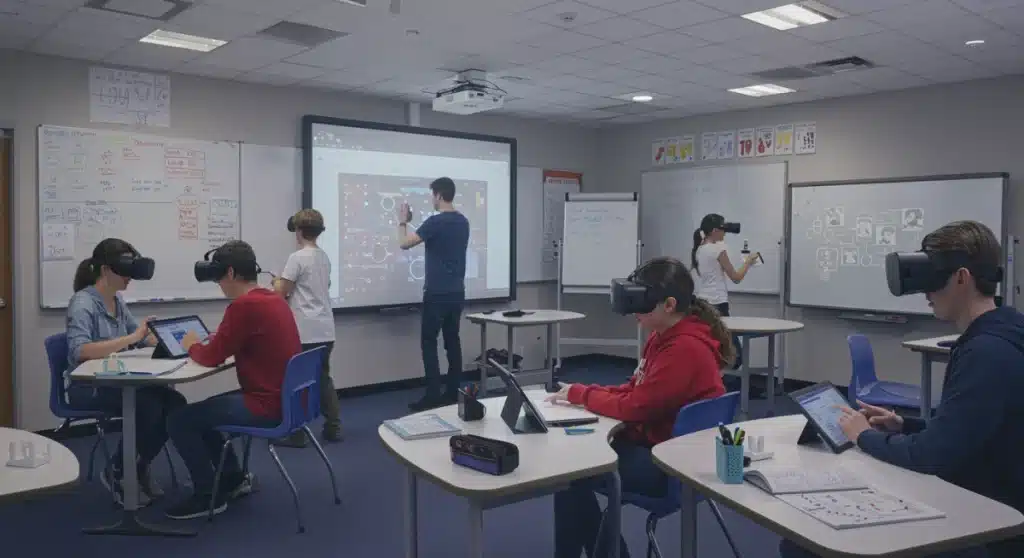
The rapid expansion of EdTech in 2026 is fundamentally reshaping American education. From AI-driven personalization to immersive learning environments, EdTech solutions are no longer optional tools but essential pillars for student success.
This update explores how the latest EdTech advancements are bridging equity gaps and driving unprecedented engagement across US school districts.
Artificial Intelligence and Adaptive Learning Systems
Artificial Intelligence (AI) is rapidly moving beyond its nascent stages in education, transforming into a core component of personalized learning experiences.
By early 2026, AI-powered adaptive platforms will be widely adopted, offering tailored curricula that adjust to each student’s pace and style.
This innovation promises to bridge learning gaps and optimize educational outcomes for diverse student populations.
These systems leverage sophisticated algorithms to analyze student performance data, identify areas of strength and weakness, and recommend specific resources or interventions.
The goal is to provide a truly individualized learning path, allowing students to master concepts before moving on, while also challenging advanced learners appropriately.
The impact on teacher workload and student engagement is expected to be significant, freeing up educators to focus on higher-level instruction and socio-emotional development.
The integration of AI also extends to automated grading for certain assignments, providing instant feedback to students and reducing administrative burdens for teachers.
This allows for more iterative learning cycles and more timely adjustments to teaching strategies. As AI continues to evolve, its capabilities in diagnosing learning difficulties and predicting academic trajectories will become even more sophisticated, fundamentally reshaping educational support systems.
Personalized Learning Pathways
AI-driven adaptive learning creates unique educational journeys for every student.
This moves away from the one-size-fits-all model, recognizing that each learner has distinct needs and preferences. These systems continuously assess progress and adapt content difficulty and presentation accordingly.
The platforms provide real-time feedback, pinpointing misconceptions and offering targeted practice.
This immediate response mechanism helps students correct errors efficiently and builds confidence, fostering a more self-directed learning approach. The ability to differentiate instruction at scale is a game-changer for diverse classrooms.
Data-Driven Instructional Improvement
- AI analyzes vast amounts of student performance data to identify trends.
- Teachers gain actionable insights into class-wide and individual learning needs.
- Curriculum adjustments can be made proactively based on data, not just intuition.
The insights gleaned from AI data empower educators to refine their teaching methods and curriculum design.
This iterative process ensures that instructional strategies are constantly optimized for maximum effectiveness. The transparency of data also facilitates better communication between teachers, parents, and students regarding academic progress.
Immersive Learning with Virtual and Augmented Reality
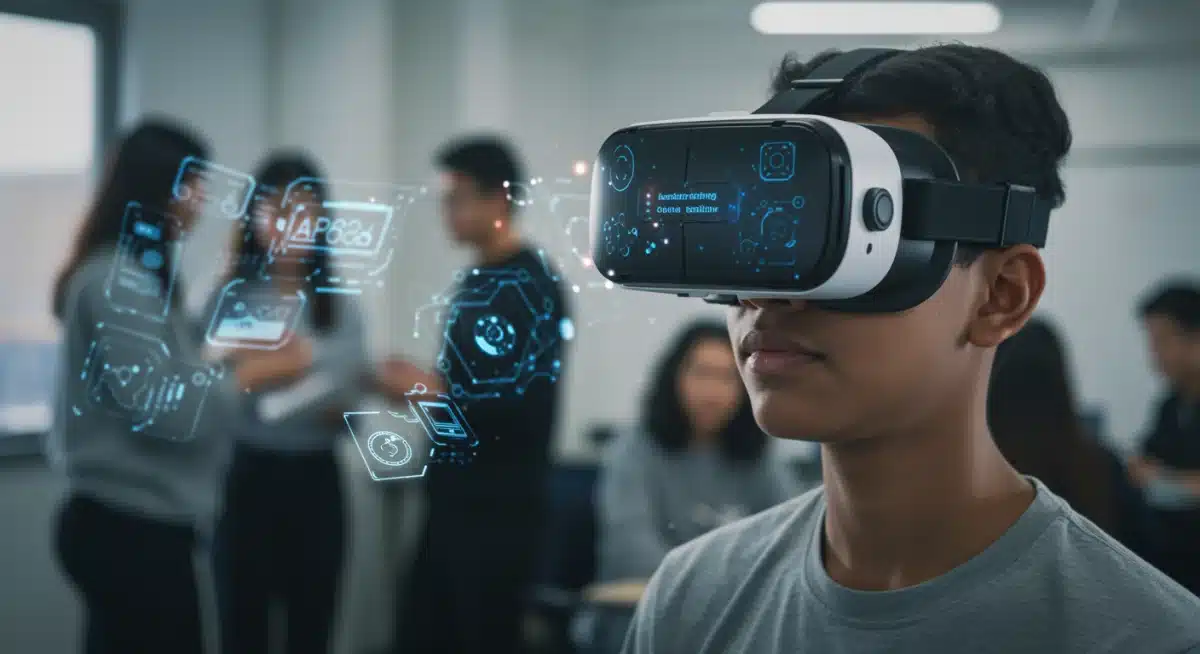
Virtual Reality (VR) and Augmented Reality (AR) are set to revolutionize how students interact with content, moving beyond passive consumption to active, experiential learning.
By early 2026, these immersive technologies will be increasingly integrated into US classrooms, offering unparalleled opportunities for exploration and engagement.
Imagine dissecting a virtual frog or walking through ancient Rome without leaving the classroom.
These technologies provide rich, multisensory experiences that can make complex subjects more accessible and memorable.
They allow students to visualize abstract concepts, conduct virtual experiments, and explore historical sites or distant ecosystems in a way that traditional textbooks or videos cannot replicate.
The potential for deep understanding and increased retention is immense, transforming education from abstract concepts to tangible experiences.
Beyond enhancing comprehension, VR and AR foster critical thinking and problem-solving skills by placing students in interactive scenarios.
They can collaborate on virtual projects, practice vocational skills in simulated environments, or even develop empathy by experiencing different perspectives.
The collaborative aspect of these technologies is particularly promising, as students learn to work together in shared virtual spaces.
Experiential Learning Simulations
VR simulations allow students to experience scenarios that are otherwise impossible or impractical.
This includes virtual field trips to distant lands, scientific experiments in safe digital labs, or historical reenactments. The hands-on nature of these simulations promotes deeper understanding and skill development.
AR overlays digital information onto the real world, enriching existing learning materials. Students can scan a textbook page and see 3D models appear, or explore a school campus with interactive digital guides.
This blend of physical and digital content creates a more dynamic and contextual learning environment, making learning more immediate and relevant.
Enhanced Engagement and Retention
- Immersive environments capture student attention more effectively than traditional methods.
- Active participation in virtual scenarios leads to better memory recall and understanding.
- Novelty and interactivity reduce boredom and increase motivation to learn.
The novelty and interactive nature of VR and AR significantly boost student engagement. When learning becomes an experience, rather than just information intake, students are more motivated to participate and explore.
This increased engagement translates directly into improved retention and a more positive attitude towards learning, making EdTech Innovations US Classrooms more effective.
Collaborative Learning Platforms and Tools
The shift towards more collaborative and project-based learning models is accelerating, supported by advanced digital platforms.
By early 2026, US classrooms will extensively utilize integrated collaborative tools that enable seamless group work, idea sharing, and collective problem-solving, both within the classroom and across distances.
These platforms are designed to mirror real-world professional environments, preparing students for future careers.
These platforms offer features such as shared document editing, real-time communication channels, virtual whiteboards, and project management functionalities.
They allow students to work together on assignments, provide peer feedback, and collectively build knowledge, fostering essential teamwork and communication skills.
The ability to collaborate asynchronously also supports flexible learning schedules and diverse learning styles, ensuring that every student can contribute effectively.
Furthermore, these tools facilitate communication between students and teachers, allowing for continuous feedback and support.
Teachers can monitor group progress, offer targeted assistance, and assess individual contributions within a collaborative context.
This transparency promotes accountability and helps educators guide group dynamics effectively, making EdTech Innovations US Classrooms more connected.
Facilitating Group Projects
Digital collaboration platforms streamline the process of group assignments, from brainstorming to final presentation. Students can divide tasks, share resources, and communicate instantly, overcoming geographical barriers.
This fosters a sense of shared responsibility and collective achievement, mirroring real-world team dynamics.
These tools also include version control and tracking features, allowing teachers to see individual contributions and evolution of ideas.
This transparency is crucial for fair assessment and for identifying students who might need additional support in group settings. The platforms are becoming indispensable for project-based learning.
Building Communication Skills
- Students learn to articulate ideas clearly and constructively critique peers’ work.
- Regular interaction through digital channels strengthens interpersonal communication.
- Experience with diverse collaboration tools prepares students for professional environments.
Effective communication is a cornerstone of success in any field, and these platforms provide a rich environment for its development.
Students learn not only to express their thoughts but also to listen, negotiate, and compromise, skills that are vital for both academic and personal growth. The practice gained through these tools is invaluable for future success.
Digital Assessment and Analytics
The evolution of assessment methods is another critical area where EdTech will make a significant impact.
By early 2026, digital assessment tools, combined with advanced analytics, will offer a more comprehensive and real-time understanding of student learning than traditional methods.
This shift allows for continuous monitoring and immediate intervention, moving away from high-stakes, summative testing as the sole measure of progress.
These systems move beyond simple multiple-choice questions, incorporating performance-based tasks, simulations, and adaptive quizzes that accurately gauge understanding.
The immediate feedback provided to students helps reinforce learning and allows for timely corrections.
For educators, the integrated analytics dashboards offer deep insights into student and class performance, highlighting specific areas needing attention.
The data collected through digital assessments can inform instructional design, curriculum development, and resource allocation.
By identifying patterns and trends in student learning, schools can make more informed decisions to improve overall educational quality. This data-driven approach to assessment is a cornerstone of effective EdTech Innovations US Classrooms.
Real-time Performance Insights
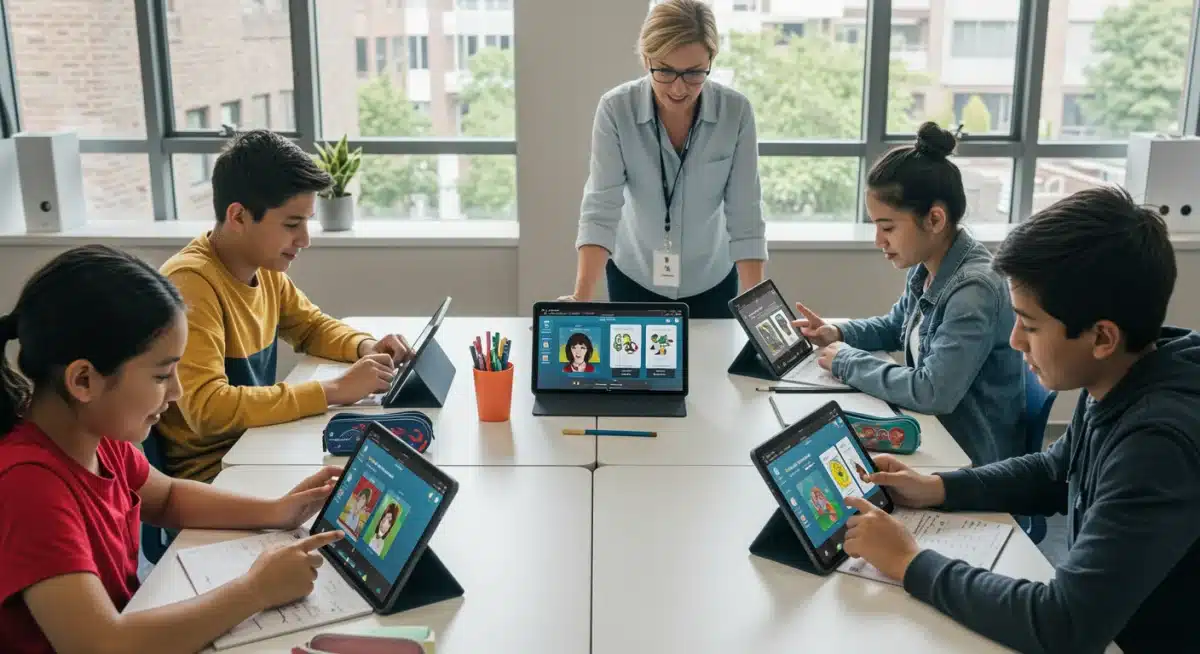
Digital assessment platforms provide instant data on student comprehension and skill mastery.
This real-time information allows teachers to adjust their lessons on the fly, addressing misconceptions before they become embedded. The ability to react quickly to student needs is a significant advantage over traditional, delayed feedback cycles.
Analytics dashboards present complex data in an understandable format, making it easy for educators to identify struggling students or areas where the whole class might need more support.
This proactive approach ensures that interventions are timely and effective, preventing students from falling behind. The detailed data helps tailor instruction effectively.
Formative and Summative Evaluation
- Digital tools support frequent, low-stakes formative assessments for continuous monitoring.
- Automated grading for specific question types frees up teacher time for qualitative feedback.
- Comprehensive analytics help identify achievement gaps and inform targeted support strategies.
The integration of formative assessments throughout the learning process is crucial for effective instruction. Digital tools make this process efficient and insightful, providing ongoing feedback loops for both students and teachers.
This blend of quantitative and qualitative data offers a richer picture of student progress and learning needs, enhancing EdTech Innovations US Classrooms.
Flexible Learning Environments and Hybrid Models
The COVID-19 pandemic accelerated the adoption of flexible and hybrid learning models, and by early 2026, these approaches will be firmly entrenched in US education.
EdTech innovations are central to making these models effective, providing the infrastructure and tools necessary for seamless transitions between in-person and remote instruction.
This flexibility caters to diverse student needs and unexpected disruptions, ensuring continuity of education.
These environments leverage sophisticated learning management systems (LMS) that serve as central hubs for course content, assignments, and communication.
Video conferencing tools, interactive whiteboards, and digital collaboration platforms facilitate engaging remote lessons and hybrid group work.
The goal is to create an educational experience that is equally robust, whether students are physically in the classroom or learning from a distance, enhancing EdTech Innovations US Classrooms.
Furthermore, flexible learning environments support greater student autonomy and self-regulation. Students learn to manage their time, utilize digital resources effectively, and take ownership of their learning journey.
This prepares them with essential skills for higher education and the modern workforce, where remote and hybrid work models are increasingly common. The adaptability fostered by these environments is a key benefit.
Seamless Blended Learning
Hybrid models combine the best aspects of in-person and online learning, allowing for flexibility and personalized pacing. EdTech platforms ensure that content, discussions, and assessments are accessible regardless of location.
This creates a resilient educational system capable of adapting to various circumstances and improving EdTech Innovations US Classrooms.
These models enable schools to offer a wider range of courses and accommodate diverse student needs, including those with health concerns or unique scheduling requirements.
The integration of digital tools ensures that all students, whether in the classroom or at home, receive a consistent and high-quality educational experience. This adaptability is critical for modern education.
Empowering Student Autonomy
- Students gain control over their learning pace and access to resources, fostering independence.
- Digital tools facilitate self-directed learning and time management skills.
- Flexible environments prepare students for future academic and professional adaptability.
Empowering students to take a more active role in their learning is a significant benefit of flexible environments. They learn to navigate digital resources, collaborate effectively online, and manage their educational journey. These skills are invaluable for success in an increasingly digital and interconnected world, making EdTech Innovations US Classrooms more future-proof.
| Key Innovation | Brief Impact Description |
|---|---|
| AI & Adaptive Learning | Personalized education paths, real-time feedback, and optimized student outcomes. |
| Immersive VR/AR | Experiential learning, enhanced engagement, and deeper comprehension through virtual simulations. |
| Collaborative Platforms | Seamless group work, improved communication, and preparation for team-based careers. |
| Digital Assessment | Real-time insights into student performance, data-driven instruction, and effective interventions. |
Frequently Asked Questions About EdTech Innovations US Classrooms
AI systems analyze student data to create customized learning paths, adjusting content difficulty and pace. This ensures each student receives materials tailored to their individual needs, bridging gaps and challenging advanced learners appropriately. It optimizes instructional effectiveness and student engagement.
VR/AR offers immersive, experiential learning, allowing students to explore complex subjects through virtual simulations and interactive environments. This enhances engagement, improves comprehension, and fosters critical thinking by providing realistic, hands-on experiences otherwise impossible in a traditional setting.
These platforms facilitate seamless group projects and real-time communication, developing essential teamwork and communication skills. Students learn to share ideas, provide feedback, and solve problems collectively, preparing them for collaborative work environments in higher education and future careers.
Digital assessment provides real-time performance insights and analytics, allowing teachers to monitor student progress continuously. This data-driven approach informs instructional adjustments, identifies learning gaps, and supports timely interventions, moving beyond traditional summative testing for a more holistic view of learning.
Flexible learning models, including hybrid approaches, will complement traditional classrooms, offering greater adaptability and resilience. They leverage EdTech to ensure continuity of education, cater to diverse student needs, and empower student autonomy, without necessarily replacing the in-person learning experience entirely.
Looking Ahead
The rapid integration of these EdTech Innovations in US Classrooms signifies a monumental shift in educational paradigms.
The focus remains on leveraging EdTech to create more equitable, engaging, and effective learning experiences. As these EdTech innovations mature, continued research and thoughtful EdTech implementation will be crucial to maximize their potential.
Educators, policymakers, and communities must collaborate to ensure these EdTech advancements truly serve every student.
To stay updated on the latest breakthroughs and implementation strategies within the world of educational technology, explore the resources at the EdTech Innovation Hub.