Boosting Student Engagement: 3 Data-Backed Strategies for US Educators 2025-2026
The latest developments on Boosting Student outcomes in the 2025–2026 academic year are drawing attention from U.S. educators and research institutions. New data highlights practical, evidence-based strategies designed to increase classroom participation and academic performance.
Understanding how engagement connects to measurable achievement is critical for schools nationwide. Recent findings emphasize targeted interventions, technology integration, and relationship-centered teaching models as high-impact approaches.
This update outlines what has changed, why it matters for educators, and what to monitor next as implementation begins. Schools focused on engagement will be better positioned to adapt to evolving academic standards and student needs.
Understanding the Current Landscape of Student Engagement
The landscape of student engagement in US education continues to evolve, presenting both challenges and opportunities for educators. Understanding the current dynamics is crucial for implementing effective strategies that resonate with today’s diverse student population.
Recent studies indicate a persistent need for innovative approaches to capture and sustain student interest across various subjects and grade levels. This ongoing demand underscores the importance of data-driven decision-making in educational policy and practice.
As the 2025-2026 academic year approaches, educators face increasing pressure to adapt their methods to meet the changing needs of students. This requires a proactive stance, moving beyond traditional models to embrace more dynamic and responsive pedagogical frameworks.
Strategy 1: Personalized Learning Pathways
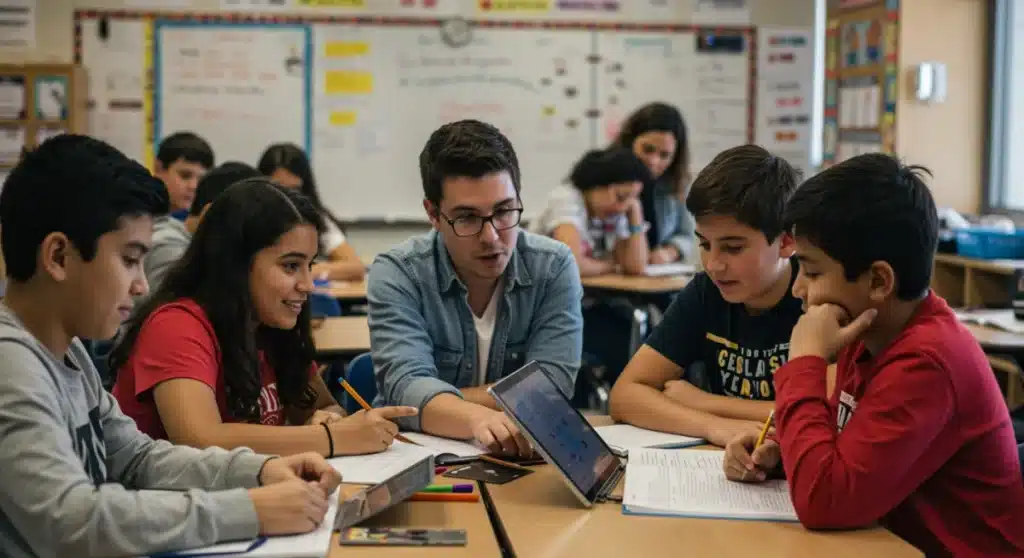
Personalized learning has emerged as a cornerstone for significantly boosting student engagement by tailoring educational experiences to individual needs. This approach acknowledges that not all students learn in the same way or at the same pace, advocating for customized curricula and instructional methods.
Data from pilot programs across various US school districts for the 2024-2025 academic year demonstrates a clear correlation between personalized learning and improved academic outcomes.
Students report higher motivation and a stronger sense of ownership over their educational journeys when content is relevant to their interests and learning styles.
For the 2025-2026 academic year, the focus intensifies on scaling these personalized pathways through advanced adaptive learning technologies and flexible classroom structures. The goal is to make individualized instruction a standard practice, thereby further boosting student engagement.
Implementing Adaptive Learning Technologies
Adaptive learning technologies play a pivotal role in delivering personalized educational content. These platforms use artificial intelligence to assess student performance and adjust the learning path dynamically, providing targeted support and enrichment.
According to a report by the EdTech Innovation Hub, schools utilizing AI-driven adaptive systems saw a 15% increase in student retention rates and a 20% improvement in subject mastery compared to traditional methods.
These technologies offer real-time feedback, allowing educators to intervene effectively when students struggle.
- Individualized pace and content delivery.
- Real-time performance analytics for educators.
- Targeted interventions and supplementary resources.
- Increased student autonomy in learning progression.
Flexible Classroom Structures and Mentorship
Beyond technology, personalized learning thrives in flexible classroom environments that support various learning modalities. This includes small group instruction, one-on-one mentorship, and project-based learning opportunities that cater to diverse student interests.
The National Bureau of Economic Research highlighted that strong mentor-student relationships significantly contribute to academic success and emotional well-being.
These relationships foster a sense of belonging and provide students with individualized guidance, which is crucial for boosting student engagement.
Creating these environments requires professional development for educators, equipping them with the skills to manage differentiated instruction and leverage student data effectively. The objective is to cultivate a learning atmosphere where every student feels seen, heard, and challenged appropriately.
Strategy 2: Integrating Technology and Digital Literacy
The strategic integration of technology is indispensable for boosting student engagement in the contemporary classroom. Digital tools, when used thoughtfully, can transform passive learning into interactive and immersive experiences, mirroring the digital fluency of today’s students.
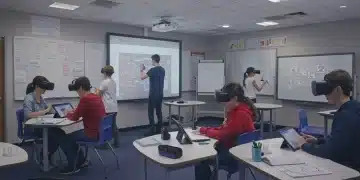
Educators are increasingly leveraging virtual reality (VR), augmented reality (AR), and interactive simulations to make complex concepts more accessible and engaging. These technologies offer unique opportunities for experiential learning that traditional methods cannot replicate.
For the 2025-2026 academic year, the emphasis will be on not just using technology, but on cultivating digital literacy skills that prepare students for a technologically advanced future.
This involves critical evaluation of digital information, responsible online behavior, and creative digital content creation, all contributing to boosting student engagement.
Leveraging Interactive Digital Platforms
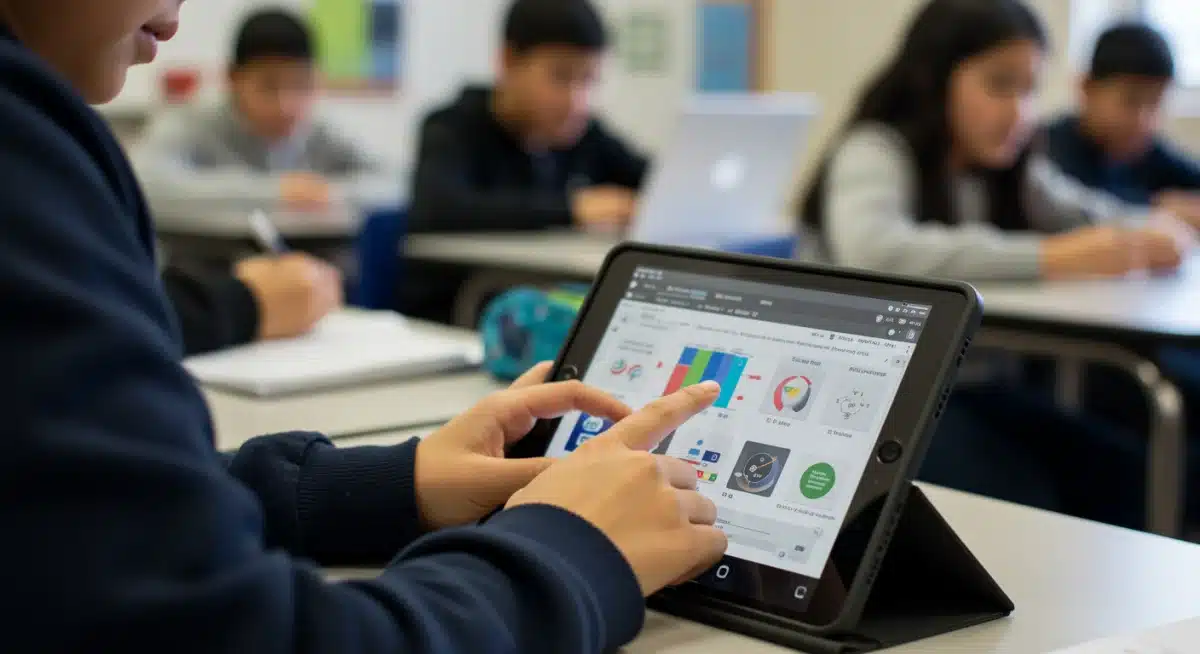
Interactive digital platforms are revolutionizing how students interact with course material and with each other. Learning management systems (LMS) with integrated gamification, collaborative tools, and multimedia resources can significantly enhance the learning experience.
A recent study published in the Journal of Educational Technology & Society found that gamified learning environments led to a 25% increase in student participation and a notable improvement in problem-solving skills. These platforms make learning feel less like a chore and more like an exciting challenge.
- Gamified learning modules and challenges.
- Collaborative online projects and discussions.
- Access to rich multimedia educational content.
- Instant feedback mechanisms for assignments.
Fostering Digital Citizenship and Creation
Beyond consumption, fostering digital citizenship means equipping students to be responsible, ethical, and creative participants in the digital world. This includes teaching them how to evaluate sources, protect their privacy, and contribute positively to online communities.
The International Society for Technology in Education (ISTE) standards advocate for moving beyond basic computer skills to empower students as digital creators and innovators.
This focus on creation, rather than just consumption, is key to boosting student engagement by tapping into their intrinsic desire to build and express.
By integrating projects that require students to create digital content, such as podcasts, videos, or interactive presentations, educators can develop their technical skills while also enhancing their critical thinking and communication abilities. This holistic approach ensures that technology serves as a tool for deeper learning and expression.
Strategy 3: Prioritizing Social-Emotional Learning (SEL)
Social-Emotional Learning (SEL) is increasingly recognized as a foundational element for boosting student engagement and overall well-being. When students feel safe, supported, and understood, they are more likely to participate actively in their learning and thrive academically.
Research from the Collaborative for Academic, Social, and Emotional Learning (CASEL) consistently shows that SEL programs lead to improved academic performance, reduced behavioral problems, and stronger interpersonal relationships among students.
These benefits create a positive feedback loop that enhances the entire learning environment.
For the 2025-2026 academic year, integrating SEL into daily instruction and school culture will be paramount. This means moving beyond standalone lessons to embed social-emotional competencies into every aspect of the school day, thereby comprehensively boosting student engagement.
Developing Emotional Intelligence and Self-Regulation
Teaching students to understand and manage their emotions is a critical component of SEL. Emotional intelligence allows students to navigate challenges, cope with stress, and maintain positive relationships, all of which are vital for sustained engagement in academic tasks.
Programs focused on self-regulation techniques, such as mindfulness and goal setting, have shown significant success in helping students manage distractions and focus on their learning.
These skills are not just beneficial for academic success but are life skills that serve students far beyond the classroom.
Educators are being trained to incorporate these practices into their daily routines, creating opportunities for students to reflect on their feelings and develop strategies for emotional management. This proactive approach to emotional well-being is essential for boosting student engagement.
Fostering Positive Relationships and Community
A strong sense of community and positive relationships within the school environment are powerful drivers for boosting student engagement.
When students feel connected to their peers and educators, they are more likely to feel motivated and invested in their learning.
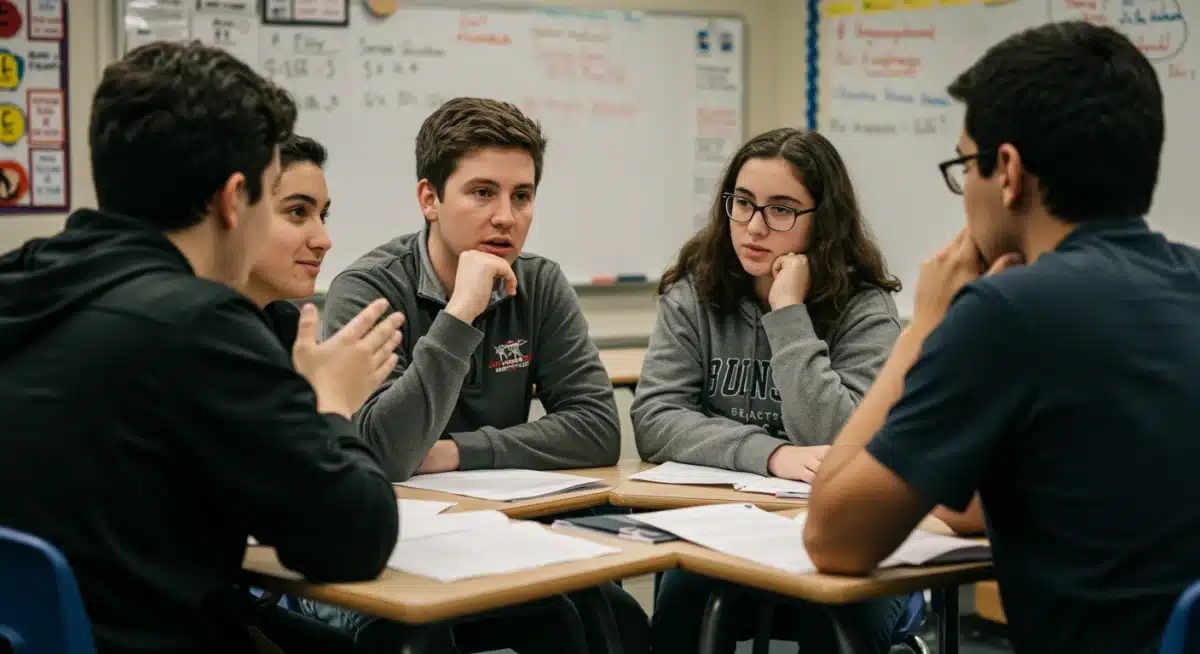
Initiatives such as peer mentoring programs, restorative justice practices, and collaborative group projects are effective in building a supportive school culture.
These programs encourage empathy, cooperation, and mutual respect, which are fundamental for a harmonious learning environment.
Creating opportunities for students to connect on a deeper level helps mitigate feelings of isolation and fosters a sense of belonging.
This collective effort to build a positive community is a direct pathway to significantly boosting student engagement across all educational settings.
Measuring Impact and Continuous Improvement
Effectively boosting student engagement requires a robust framework for measuring the impact of implemented strategies and a commitment to continuous improvement. Data collection and analysis are not just about accountability but about refining approaches to better serve student needs.
Educators must utilize a variety of metrics, including attendance rates, participation levels, academic performance, and student feedback surveys, to gain a comprehensive understanding of engagement levels. This multi-faceted data provides actionable insights for future adjustments.
For the 2025-2026 academic year, schools are encouraged to establish clear benchmarks and regularly review their progress. This iterative process ensures that strategies for boosting student engagement remain relevant, effective, and responsive to the evolving educational landscape.
Data-Driven Decision Making in Practice
The shift towards data-driven decision-making means moving beyond anecdotal evidence to rely on empirical data for guiding educational reforms. This involves training educators to collect, interpret, and apply various forms of student data to inform their teaching practices.
According to the National Center for Education Statistics, schools that systematically analyze student engagement data are more likely to identify at-risk students earlier and implement timely interventions.
This proactive approach is vital for preventing disengagement before it becomes a significant obstacle.
- Regular analysis of attendance and participation data.
- Utilizing formative assessments to gauge understanding.
- Collecting qualitative student feedback through surveys and interviews.
- Benchmarking against national and local engagement standards.
Iterative Strategy Refinement
Continuous improvement is a hallmark of successful educational innovation. Strategies for boosting student engagement should not be static; they must be adaptable and subject to ongoing refinement based on performance data and emerging research.
Educational leaders are advocating for professional learning communities where educators can share best practices, discuss challenges, and collaboratively develop new approaches. This collegial environment fosters innovation and ensures that all educators are equipped to contribute to boosting student engagement.
The 2025-2026 academic year will see an increased emphasis on agile educational development, where strategies are piloted, evaluated, and refined in relatively short cycles. This ensures that the efforts to boost student engagement are always aligned with the most current understanding of effective pedagogy.
Challenges and Overcoming Barriers
While the strategies for boosting student engagement are promising, their implementation is not without challenges. Educators often face resource constraints, resistance to change, and the complexities of diverse student populations, all of which can impede progress.
Addressing these barriers requires a multi-pronged approach involving strategic funding, comprehensive professional development, and strong leadership.
It is essential to create an environment where innovation is supported and educators feel empowered to experiment with new methods.
Overcoming these obstacles is critical for realizing the full potential of personalized learning, technology integration, and SEL in boosting student engagement.
The collective commitment of all stakeholders is necessary to transform these challenges into opportunities for growth and improvement.
| Key Strategy | Description and Impact |
|---|---|
| Personalized Learning | Tailored educational experiences increase student motivation and academic outcomes by matching individual needs. |
| Technology Integration | Interactive digital tools and digital literacy foster immersive learning and prepare students for the future. |
| Social-Emotional Learning | Building emotional intelligence and positive relationships enhances well-being and academic participation. |
| Data-Driven Refinement | Systematic data collection and analysis ensure continuous improvement of engagement strategies. |
Frequently Asked Questions on Student Engagement
The primary goal is to foster a dynamic and effective learning environment where students are actively involved, motivated, and invested in their education. This leads to improved academic performance, enhanced critical thinking skills, and greater overall satisfaction with their schooling experience.
Personalized learning tailors content and pace to individual student needs and interests. This customization makes learning more relevant and challenging, preventing boredom or frustration. When students feel their learning path is unique to them, their motivation and active participation significantly increase.
Technology transforms passive learning into interactive experiences through tools like VR, AR, and gamified platforms. It provides immediate feedback, access to vast resources, and opportunities for creative expression. This aligns with students’ digital fluency, making learning more immersive and relevant to their daily lives.
SEL helps students develop self-awareness, self-management, social awareness, relationship skills, and responsible decision-making. These competencies create a supportive classroom climate where students feel safe and connected. Emotionally intelligent students are better equipped to handle challenges, reducing disengagement and fostering a positive learning attitude.
Educators can measure effectiveness through various data points: attendance rates, participation in class, academic performance, and student feedback surveys. Observing behavioral changes, such as increased collaboration or initiative, also provides qualitative insights. Regular analysis of these metrics informs continuous improvement for boosting student engagement.
Looking Ahead: The Future of Student Engagement
The concerted effort to implement data-backed strategies for boosting student engagement in the 2025-2026 academic year signals a pivotal shift in US education.
This forward-looking approach emphasizes adaptability and student-centric methodologies. Educators, policymakers, and communities must continue to collaborate, ensuring that these strategies are not just implemented but sustained and evolved.
The future of education hinges on creating environments where every student feels valued, challenged, and deeply connected to their learning journey, thereby consistently boosting student engagement across all levels.