Space Exploration: NASA’s Next Major Mission Launch Scheduled for March 2026
Latest developments on Space Exploration: NASA’s Next Major Mission Launch Scheduled for March 2026, with key facts, verified sources and what readers need to monitor next in Estados Unidos, presented clearly in Inglês (Estados Unidos) (en-US).
Space Exploration: NASA’s Next Major Mission Launch Scheduled for March 2026 is shaping today’s agenda with new details released by officials and industry sources. This update prioritizes what changed, why it matters and what to watch next, in a straightforward news format.
The upcoming mission represents a significant milestone in humanity’s endeavor to push the boundaries of our understanding of the cosmos. NASA has meticulously planned this venture, integrating advanced technologies and scientific objectives to maximize its potential.
The scientific community and the general public are eagerly anticipating this launch, recognizing its profound implications for future interplanetary travel and the search for extraterrestrial life. This mission is not merely a launch; it is a testament to human ingenuity and perseverance.
Unveiling the Mission’s Ambitious Objectives
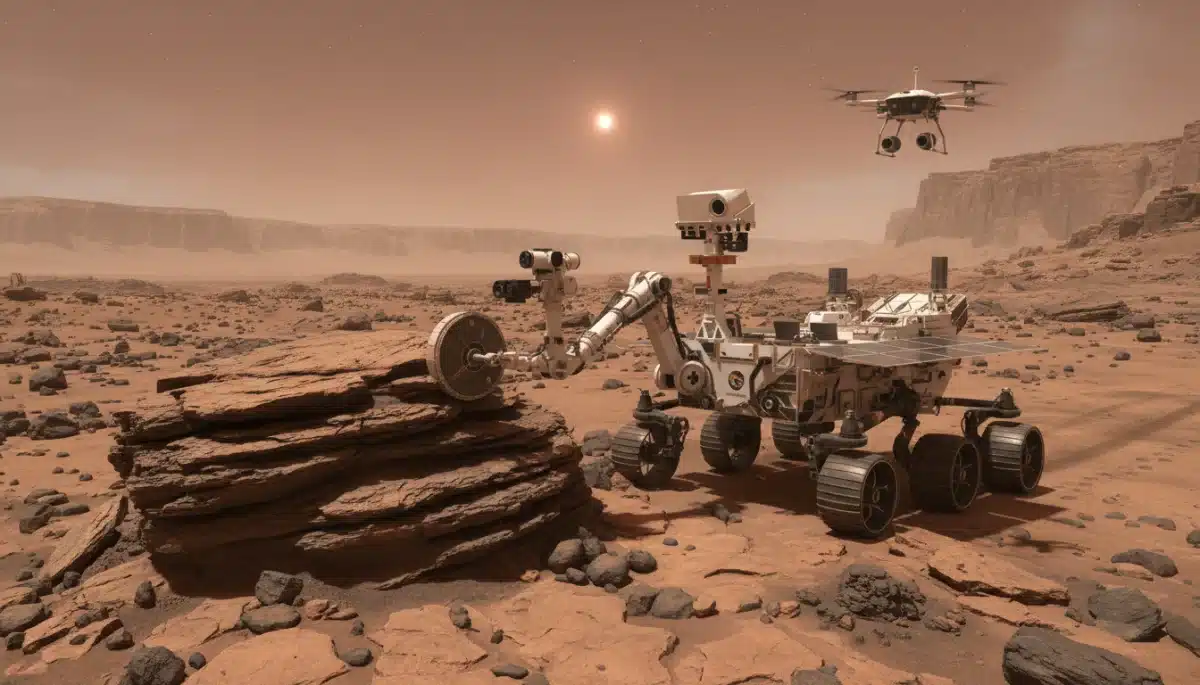
NASA’s next major mission launch scheduled for March 2026 carries a suite of ambitious objectives designed to expand our knowledge of Mars and prepare for human exploration. These goals range from sophisticated geological surveys to assessments of the Martian atmosphere’s long-term viability.
The mission aims to collect unprecedented data, focusing on potential subsurface water ice, ancient microbial life, and the planet’s seismic activity. This comprehensive approach is crucial for understanding Mars’s past and predicting its future.
Furthermore, critical tests of advanced propulsion and life support systems will be conducted, providing invaluable insights for future crewed missions. The success of these tests is paramount for ensuring the safety and efficiency of long-duration space travel.
Key Scientific Goals for Mars Exploration
The primary scientific objectives include detailed mapping of Martian geological features and identifying potential landing sites for future human missions. Understanding the planet’s geological history is vital for deciphering its evolutionary path.
Another significant goal involves analyzing atmospheric composition and dynamics to better understand climate patterns and resource availability. This data will inform strategies for human habitats and resource utilization on Mars.
- Deep geological surveys to identify ancient water sources and mineral deposits.
- Atmospheric composition analysis to understand climate change and habitability.
- Seismic activity monitoring to map the planet’s internal structure.
- Search for biosignatures indicating past or present microbial life.
These goals are interconnected, each contributing to a holistic understanding of the Red Planet. The data collected will serve as a foundation for subsequent missions and long-term research.
Technological Innovations Driving the Mission
The mission incorporates groundbreaking technological advancements, including improved autonomous navigation systems and more efficient power generation. These innovations are critical for operating in the harsh Martian environment.
New drilling capabilities will allow access to deeper subsurface layers, potentially revealing protected environments where life could exist. This represents a significant leap from previous Martian exploration methods.
The development of advanced communication systems will ensure high-bandwidth data transmission back to Earth, enabling real-time command and control. This robust communication link is essential for mission success.
The Role of the Space Launch System (SLS)
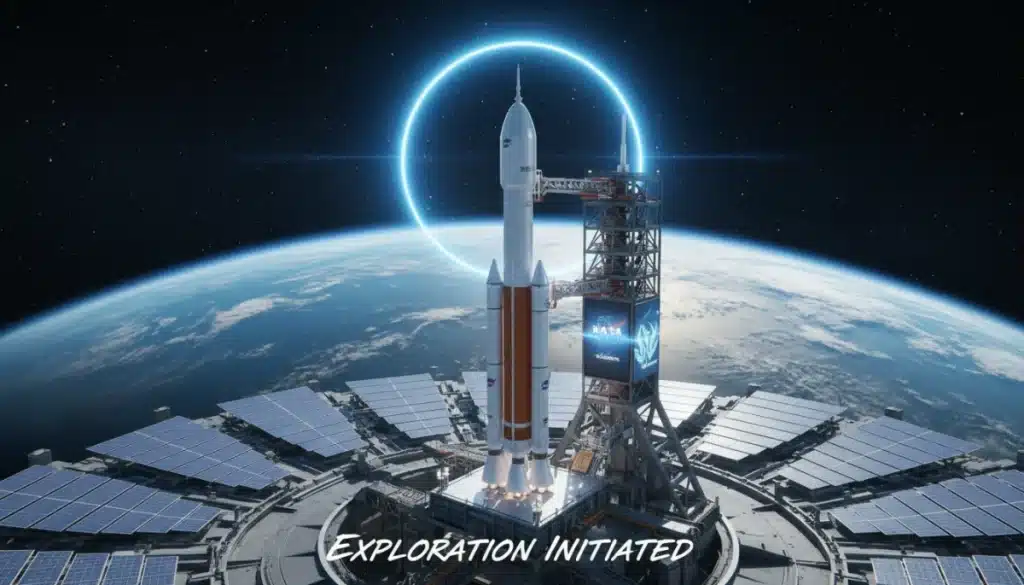
The Space Launch System (SLS) will serve as the primary launch vehicle for NASA’s next major mission launch scheduled for March 2026. Its immense power and unprecedented capabilities are essential for transporting heavy payloads and critical hardware to Mars.
The SLS is designed to exceed the performance of any previous rocket, providing the thrust necessary for deep-space trajectories. This makes it an indispensable component of NASA’s ambitious future plans.
Its development has been a monumental engineering feat, combining decades of aerospace expertise to create a launch system capable of supporting human missions beyond Earth orbit. The SLS is a cornerstone of the Artemis program and future interplanetary endeavors.
SLS Capabilities and Mission Profile
The SLS offers unparalleled lift capacity, enabling the deployment of larger and more complex scientific instruments and habitats. This capacity is crucial for the ambitious scope of the NASA Mars Mission 2026.
Its design allows for efficient trans-Mars injection, significantly reducing transit times and mission duration. This efficiency is vital for minimizing risks and maximizing scientific return.
The mission profile involves a precise launch window in March 2026, optimized for planetary alignment to ensure a fuel-efficient journey. The trajectory will be carefully monitored and adjusted throughout the cruise phase to guarantee accurate arrival at Mars.
Preparations and Testing Phases for SLS
Extensive ground testing and static fire exercises have been conducted to validate the SLS’s structural integrity and engine performance. These rigorous tests are critical for identifying and mitigating potential issues before launch.
Integration of the mission’s payload with the SLS is a complex process, involving meticulous checks and simulations to ensure compatibility and functionality. Every component must perform flawlessly for the mission to succeed.
NASA engineers and technicians are working tirelessly to complete the final assembly and checkout procedures, adhering to stringent safety and quality standards. The final readiness review will confirm all systems are go for the NASA Mars Mission 2026.
International Collaboration and Partnerships
NASA’s next major mission launch scheduled for March 2026 is bolstered by significant international collaboration and strategic partnerships. These alliances pool global expertise and resources, enhancing the mission’s scope and potential for success.
Agencies from Europe, Japan, and Canada are contributing specialized instruments, operational support, and scientific analysis capabilities. This collaborative model reflects a global commitment to advancing space exploration.
These partnerships not only share the financial and technical burdens but also foster a spirit of unity in the pursuit of scientific discovery. The collective effort amplifies the mission’s impact and broadens its scientific reach.
Key International Partners and Contributions
The European Space Agency (ESA) is providing advanced atmospheric sensors and communication relays, critical for data transmission and Martian weather monitoring. Their contributions are vital for understanding the planet’s environment.
Japan Aerospace Exploration Agency (JAXA) is developing cutting-edge robotic components and sample return mechanisms, which will be essential for bringing Martian samples back to Earth. These technologies push the boundaries of robotic autonomy.
- ESA: Advanced atmospheric sensors and communication relays.
- JAXA: Robotic components and sample return mechanisms.
- Canadian Space Agency (CSA): Specialized navigation and imaging systems.
These contributions highlight the diverse strengths brought by each partner, creating a truly global endeavor. The synergy of these collaborations is a testament to the shared vision for future space exploration.
Benefits of Global Cooperation in Space
International collaboration significantly reduces the financial burden on individual nations, allowing for more ambitious and complex missions. This shared investment accelerates the pace of scientific discovery.
It also fosters a global exchange of knowledge and technology, leading to rapid advancements in various fields, from materials science to artificial intelligence. The cross-pollination of ideas is invaluable.
Ultimately, these partnerships strengthen diplomatic ties and promote peaceful cooperation on a global scale, demonstrating humanity’s ability to unite for common goals. The NASA Mars Mission 2026 exemplifies this spirit of global collaboration.
Challenges and Mitigations for the 2026 Launch
Launching a mission as complex as NASA’s next major mission launch scheduled for March 2026 presents numerous challenges, from technical hurdles to environmental factors. NASA has developed comprehensive mitigation strategies to address these.
Potential issues include unforeseen technical malfunctions, adverse weather conditions at launch, and the inherent risks of deep-space travel. Each challenge requires meticulous planning and robust contingency measures.
The agency’s approach involves rigorous testing, redundant systems, and continuous monitoring to ensure mission safety and success. Preparation is key to overcoming the inherent difficulties of space exploration.
Overcoming Technical Hurdles
Developing and integrating advanced propulsion systems and complex scientific payloads require overcoming significant engineering challenges. These systems must operate flawlessly in extreme conditions.
Ensuring the longevity and reliability of spacecraft components for a multi-year mission is paramount, demanding materials and designs capable of withstanding radiation and temperature fluctuations. Every component is rigorously tested.
Software development and cybersecurity are also critical, as the mission relies heavily on autonomous operations and secure data transmission. Protecting against cyber threats is as important as physical protection.
Addressing Environmental and Operational Risks
The launch window in March 2026 is carefully selected to minimize exposure to solar flares and space debris, which can pose significant threats to the spacecraft. Predicting and avoiding these hazards is a core part of mission planning.
Maintaining precise communication with the spacecraft across vast interplanetary distances is another major challenge, requiring sophisticated ground stations and robust communication protocols. Data integrity is crucial.
Contingency plans for unexpected events, such as system failures or trajectory deviations, are thoroughly developed and rehearsed. These plans ensure that the mission can adapt to unforeseen circumstances and continue towards its objectives.
The Artemis Program’s Connection to Mars
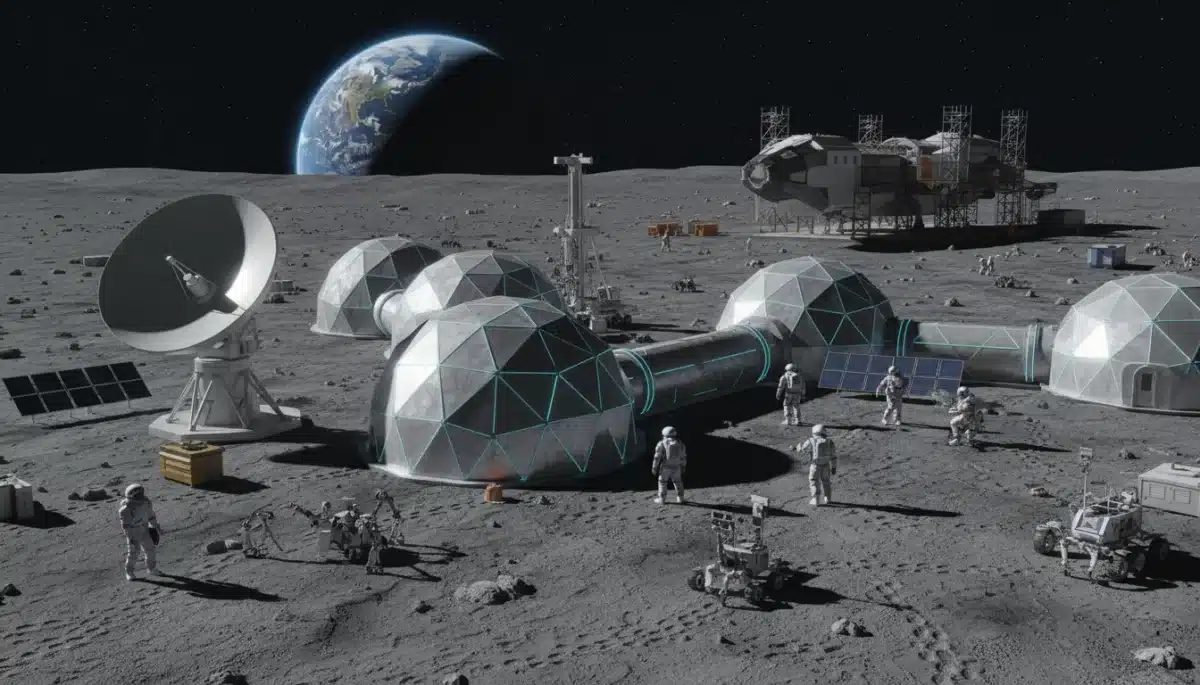
NASA’s next major mission launch scheduled for March 2026 is intricately linked to the broader Artemis program, which aims to return humans to the Moon and establish a sustainable lunar presence. The Moon serves as a crucial stepping stone for Mars.
Artemis missions are designed to develop and test technologies and procedures that will be essential for human missions to Mars. This includes advanced life support, radiation shielding, and in-situ resource utilization.
The experience gained from lunar operations will directly inform and enable future human exploration of the Red Planet. The Moon is not an end in itself, but a proving ground for deeper space endeavors.
Lunar Gateway and Mars Transit
The Lunar Gateway, a planned space station orbiting the Moon, will play a critical role in supporting missions to Mars. It will serve as a staging point for astronauts and cargo, streamlining deep-space travel.
Astronauts will use the Gateway as a hub for training, equipment testing, and potentially as a launchpad for Mars transit vehicles. This strategic outpost reduces the logistical challenges of direct Earth-to-Mars travel.
The development of habitats and logistical support systems for the Gateway will directly contribute to the capabilities needed for long-duration human missions to Mars. The NASA Mars Mission 2026 will leverage these advancements.
Developing Technologies for Deep Space
The Artemis program is driving the development of next-generation propulsion systems, such as nuclear thermal propulsion, which could significantly reduce travel times to Mars. Faster transit is safer and more efficient.
Advanced life support systems capable of recycling air and water for extended periods are being refined on the Moon. These closed-loop systems are vital for sustaining human life on long interplanetary voyages.
Furthermore, technologies for extracting and utilizing resources from lunar regolith are being perfected, providing a blueprint for similar operations on Mars. This self-sufficiency is key to sustainable exploration.
Anticipated Discoveries and Future Implications
The anticipated discoveries from NASA’s next major mission launch scheduled for March 2026 hold profound implications for both science and humanity’s long-term future in space. This mission is expected to yield groundbreaking insights.
New data on Martian geology, climate, and potential biosignatures could fundamentally alter our understanding of planetary evolution and the prevalence of life beyond Earth. Such discoveries would be truly revolutionary.
Beyond scientific gains, the mission will inspire a new generation of scientists, engineers, and explorers, fostering innovation and pushing the boundaries of human achievement. Its legacy will extend far into the future.
Potential for Life on Mars
One of the most exciting prospects is the potential discovery of evidence for past or present microbial life on Mars. This would be a monumental finding, reshaping our cosmic perspective.
The mission’s advanced instruments are designed to detect subtle biosignatures in Martian rocks and soil, focusing on areas where liquid water may have once existed. The search is more sophisticated than ever before.
Confirmation of even fossilized microbial life would suggest that life is not unique to Earth, prompting profound philosophical and scientific debates. The implications are truly immense.
Paving the Way for Human Colonization
The mission’s data on Martian resources, environmental conditions, and radiation levels will be indispensable for planning future human settlements. Understanding the planet’s habitability is crucial.
Testing technologies for in-situ resource utilization, such as converting Martian ice into breathable air and rocket fuel, is a key step towards sustainable human presence. This self-sufficiency is vital for long-term colonization.
The knowledge gained will directly inform the design of Martian habitats, life support systems, and protective measures against the harsh environment. The NASA Mars Mission 2026 is laying the groundwork for humanity’s expansion into the solar system.
Public Engagement and Educational Outreach
NASA’s next major mission launch scheduled for March 2026 is not just a scientific endeavor; it is also a powerful tool for public engagement and educational outreach. Inspiring the next generation is a core mission.
Through various initiatives, NASA aims to involve people of all ages in the excitement of space exploration, making science and engineering accessible and captivating. Public interest is a vital component of support.
Educational programs, virtual reality experiences, and citizen science projects will allow the public to participate directly in the mission’s journey and discoveries. This fosters a sense of shared ownership and excitement.
Inspiring the Next Generation
The mission will be featured prominently inSTEM education curricula, providing real-world examples of scientific principles and technological applications. This practical application makes learning more engaging.
Live broadcasts from Mission Control, interviews with scientists and engineers, and interactive online content will bring the mission directly into classrooms and homes. This direct access is invaluable for engagement.
- Educational toolkits for K-12 classrooms.
- Interactive online platforms for mission tracking.
- Public lectures and virtual Q&A sessions with NASA experts.
- Citizen science opportunities for data analysis.
These efforts aim to spark curiosity and encourage students to pursue careers in science, technology, engineering, and mathematics. The NASA Mars Mission 2026 serves as a powerful catalyst for future innovation.
Citizen Science and Community Involvement
Citizen science projects will allow the public to contribute to the mission by analyzing data, identifying features on Mars, and even helping to plan rover traverses. This direct involvement is highly motivating.
Community events, planetarium shows, and museum exhibits will provide opportunities for hands-on learning and interaction with mission experts. These local initiatives foster a deeper connection to space exploration.
Social media campaigns and digital storytelling will share the mission’s progress and discoveries in real-time, reaching a global audience and fostering a sense of shared human endeavor. The mission belongs to everyone.
Economic and Technological Spinoffs
NASA’s next major mission launch scheduled for March 2026 is expected to generate significant economic and technological spinoffs, extending its impact far beyond scientific discovery. These benefits have broad societal implications.
Investments in aerospace research and development stimulate job growth and foster innovation in various industries, from manufacturing to software engineering. The economic ripple effect is substantial.
Technologies developed for space missions often find practical applications on Earth, improving everyday life and creating new markets. Space exploration is a powerful driver of terrestrial innovation.
Advancements in Earth-Based Technologies
Miniaturization of sensors and electronics for spacecraft can lead to smaller, more efficient devices for medical diagnostics and consumer electronics. The drive for compact space systems benefits many fields.
Advanced materials developed to withstand extreme space environments can be adapted for use in infrastructure, transportation, and energy sectors on Earth. These materials offer superior performance and durability.
Software algorithms for autonomous navigation and data processing, essential for the NASA Mars Mission 2026, can be applied to self-driving cars, robotics, and artificial intelligence systems. The transfer of knowledge is immense.
Job Creation and Economic Impact
The mission directly supports thousands of high-tech jobs across the United States, from engineers and scientists to manufacturing technicians and project managers. These are highly skilled positions.
Indirectly, the demand for specialized components and services creates a robust supply chain, benefiting numerous small and medium-sized businesses. The economic ecosystem around space is thriving.
Furthermore, the prestige associated with leading space exploration attracts international talent and investment, solidifying the United States’ position as a global leader in science and technology. The long-term economic gains are significant.
Looking Ahead: Post-Launch Operations and Data Analysis
Following NASA’s next major mission launch scheduled for March 2026, the focus will shift to meticulous post-launch operations and the critical phase of data analysis. This period is crucial for realizing the mission’s scientific potential.
The spacecraft’s journey to Mars will involve continuous monitoring, trajectory corrections, and system health checks to ensure a successful arrival and deployment. Precision is paramount throughout this phase.
Once on Mars, the mission will commence its primary scientific investigations, transmitting a wealth of data back to Earth for analysis by a global team of researchers. This data will unlock new secrets of the Red Planet.
Cruise Phase and Mars Arrival
During the cruise phase, the spacecraft will undergo a series of health checks and instrument calibrations to prepare for its Martian environment. These preparations are vital for optimal performance upon arrival.
The complex Mars orbital insertion and subsequent landing procedures will be executed with extreme precision, relying on advanced autonomous systems and real-time command from Earth. This is a high-stakes maneuver.
Upon successful deployment, the mission will begin its operational life, marking the culmination of years of planning and preparation. The start of scientific data collection is a moment of triumph.
Data Analysis and Scientific Publications
The vast amounts of data transmitted from Mars will be processed and analyzed by an international team of scientists, seeking to answer fundamental questions about the planet. This collaborative effort is key to interpreting the findings.
Initial findings and discoveries will be published in peer-reviewed scientific journals, making the new knowledge accessible to the global scientific community. Transparency and peer review are cornerstones of scientific progress.
Further detailed analysis will continue for years, potentially leading to new theories and a deeper understanding of Mars’s past, present, and future. The long-term scientific return of the NASA Mars Mission 2026 is immense.
| Key Point | Brief Description |
|---|---|
| Launch Date | Scheduled for March 2026, optimizing planetary alignment. |
| Primary Goal | Advance Mars science and prepare for human exploration. |
| Key Technology | Utilizes the powerful Space Launch System (SLS) for heavy lift. |
| Global Impact | Fosters international collaboration, inspiring future generations. |
Frequently Asked Questions About the 2026 Mars Mission
The primary goal is to conduct advanced scientific research on Mars, focusing on geological surveys, atmospheric analysis, and the search for biosignatures. This mission also aims to test critical technologies for future human exploration, paving the way for eventual crewed missions to the Red Planet.
The mission will utilize NASA’s Space Launch System (SLS), a super heavy-lift expendable launch vehicle. The SLS is crucial for transporting the mission’s large and complex payload to Mars, providing the necessary power and capability for deep-space trajectories and efficient trans-Mars injection.
The NASA Mars Mission 2026 is deeply integrated with the Artemis program. Artemis aims to return humans to the Moon, establishing a sustainable lunar presence to test technologies and procedures essential for human missions to Mars. The Moon serves as a critical proving ground for deep-space capabilities.
The mission benefits from significant international partnerships with agencies like ESA, JAXA, and CSA. These collaborations involve contributions of specialized instruments, operational support, and scientific expertise, fostering global unity in space exploration and sharing the technical and financial burdens for a more ambitious mission.
The mission holds potential for groundbreaking discoveries regarding life beyond Earth and will provide crucial data for future human colonization of Mars. It will also generate economic and technological spinoffs, inspiring future generations and fostering innovation across various industries, impacting life on Earth significantly.
What Happens Now
The anticipation surrounding NASA’s next major mission launch scheduled for March 2026 continues to build, with ongoing preparations and final system checks underway. This mission represents a critical step in humanity’s pursuit of understanding Mars and preparing for future human presence beyond Earth.
Readers should closely follow official NASA announcements, scientific publications, and educational outreach initiatives as the launch date approaches. The insights gained from this mission will undoubtedly shape the trajectory of space exploration for decades to come.
The impact of the NASA Mars Mission 2026 extends beyond scientific discovery, influencing technological advancements, international relations, and inspiring a new era of exploration and innovation. Its success is paramount for the future of space endeavors.