Global Trade Shift: Tariffs Reshaping US Supply Chains by Mid-2026
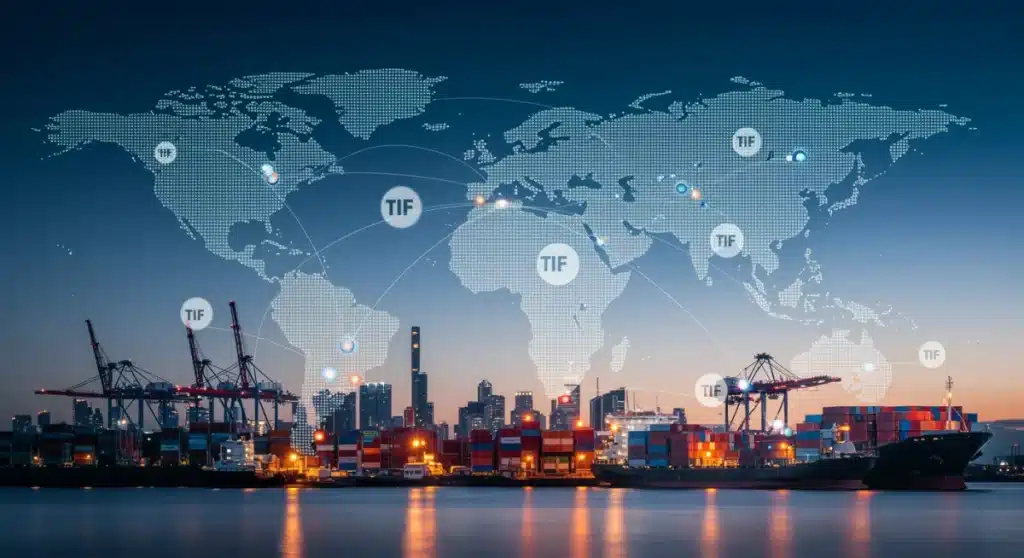
New tariffs are driving a profound “Global Trade Shift.”
As these changes fundamentally alter established trade routes and manufacturing hubs, industries across the United States are being forced to reconfigure their sourcing strategies to mitigate rising costs.
This article provides a clear, factual overview of how these policies are reshaping the economic landscape.
We will delve into the anticipated impacts and the strategic responses emerging across sectors, helping you navigate the challenges and opportunities presented by this new trade reality.
Understanding the New Tariff Landscape and its Genesis
The recent announcements regarding increased tariffs on a range of key imports signal a deliberate policy shift aimed at bolstering domestic production and rebalancing trade relationships.
These measures are not isolated but rather part of a broader strategy to secure critical supply chains and reduce reliance on specific overseas markets.
The rationale behind these tariffs stems from a confluence of factors, including national security concerns, economic competitiveness, and a desire to address perceived unfair trade practices.
Policymakers argue that these actions are necessary to protect American industries and jobs in the long term.
As these tariffs begin to take effect, businesses are confronting a new reality that necessitates a re-evaluation of their global procurement and manufacturing strategies.
The implications extend beyond immediate cost increases, touching upon geopolitical considerations and the future resilience of the US economy.
Key Sectors Targeted by New Tariffs
Several critical sectors have been identified as primary targets for the new tariff regimes, reflecting strategic national interests and economic vulnerabilities.
These include, but are not limited to, advanced manufacturing components, renewable energy technologies, and certain raw materials essential for industrial production.
The selection of these sectors is not arbitrary; it aims to stimulate domestic investment and innovation in areas deemed vital for future economic growth and security.
Businesses within these industries are now under pressure to adapt quickly to avoid significant disruptions.
The specific goods affected range from semiconductors and electric vehicle batteries to steel and aluminum derivatives, impacting a wide array of downstream industries.
This targeted approach underscores the strategic intent behind the Global Trade Shift.
- Advanced Manufacturing Components: Tariffs on semiconductors and precision machinery aim to promote domestic production and reduce reliance on foreign suppliers.
- Renewable Energy Technologies: Increased duties on solar panels and EV components are designed to boost American clean energy manufacturing capabilities.
- Critical Raw Materials: Tariffs on certain minerals and metals are intended to secure supply for strategic industries and lessen geopolitical vulnerabilities.
Immediate Impacts on US Supply Chains
The introduction of new tariffs has created an immediate ripple effect throughout US supply chains, prompting businesses to reassess their operational models.
Early indicators suggest a surge in demand for domestic alternatives and a heightened focus on inventory management to mitigate rising import costs.
Companies are reporting increased lead times and logistical complexities as they navigate the revised trade landscape.
This initial period of adjustment is critical, as businesses strive to maintain competitiveness while absorbing or passing on the additional expenses to consumers.
The immediate impacts highlight the interconnectedness of global trade, demonstrating how policy changes in one area can quickly reverberate across multiple industries and consumer markets.
This rapid adaptation is a defining characteristic of the current Global Trade Shift.
Rising Costs and Consumer Prices
One of the most direct and tangible consequences of the new tariffs is the upward pressure on import costs, which inevitably translates into higher prices for consumers.
Businesses are faced with the difficult decision of absorbing these costs, thereby impacting profit margins, or passing them on to end-users.
Analysts project that these price increases will be felt across various consumer goods, from electronics and automobiles to everyday household items.
The extent of the impact will depend on the elasticity of demand for these products and the availability of cost-effective domestic alternatives.
This inflationary pressure could potentially dampen consumer spending, leading to broader economic implications.
The balancing act between protecting domestic industries and maintaining consumer affordability is a central challenge in this Global Trade Shift.
Strategic Responses from US Businesses
In response to the evolving tariff environment, US businesses are implementing a range of strategic adjustments to safeguard their operations and maintain market share.
These responses are multifaceted, encompassing sourcing diversification, reshoring initiatives, and technological investments.
Many companies are actively exploring new international suppliers in countries not subject to the increased tariffs, seeking to establish more resilient and geographically diverse supply networks.
This shift aims to reduce dependency on traditional sourcing hubs and mitigate future trade disruptions.
Furthermore, there is a growing impetus towards bringing production capabilities back to the United States or to allied nations, a process often referred to as reshoring or nearshoring.
This strategic pivot reflects a long-term vision for enhanced supply chain security and control, driven by the ongoing Global Trade Shift.
Diversification of Supply Sources
A primary strategy adopted by many US companies is the aggressive diversification of their supply chains.
This involves identifying and qualifying new suppliers in various regions, thereby reducing the concentration risk associated with relying on a single country or a limited number of providers.
This diversification extends beyond geographical considerations to include a broader range of suppliers, fostering greater flexibility and resilience in the face of unforeseen trade policies or geopolitical events.
The goal is to create a more robust and adaptable supply network that can withstand future shocks.
Such efforts often require significant investment in supplier relationship management, quality control, and logistics infrastructure, but are seen as essential for long-term viability in the context of the Global Trade Shift.
- Geographic Expansion: Exploring new supplier markets in Southeast Asia, Latin America, and other emerging economies.
- Vendor Portfolio Broadening: Engaging multiple suppliers for critical components to avoid single-point-of-failure risks.
- Risk Assessment: Conducting thorough evaluations of new suppliers for geopolitical stability, labor practices, and regulatory compliance.
Reshoring and Nearshoring Initiatives
The concept of reshoring, or bringing manufacturing and production back to the US, is gaining considerable traction as a direct consequence of the tariff environment.
This movement is supported by government incentives and a renewed focus on domestic job creation and economic independence.
Similarly, nearshoring, which involves relocating production to neighboring countries like Mexico or Canada, offers a balance between cost efficiency and reduced geopolitical risk.
Both strategies aim to shorten supply chains and enhance responsiveness to market demands.
These initiatives, while capital-intensive and complex to execute, promise greater control over production processes, improved quality assurance, and reduced vulnerability to international trade disputes.
The push for reshoring is a significant component of the Global Trade Shift.
Technological Adoption and Innovation
The imperative to adapt to new trade realities is also accelerating the adoption of advanced technologies across US manufacturing and logistics sectors.
Automation, artificial intelligence, and data analytics are becoming indispensable tools for optimizing supply chain efficiency and reducing costs.
Investments in smart factories and predictive analytics are enabling companies to better anticipate demand fluctuations, manage inventory more effectively, and streamline production processes.
These technological advancements are crucial for maintaining competitiveness in a high-tariff environment.
Furthermore, blockchain technology is being explored to enhance supply chain transparency and traceability, providing greater assurance regarding the origin and compliance of goods.
This technological embrace is a key enabler of the ongoing Global Trade Shift.
Automation and AI in Manufacturing
The integration of automation and artificial intelligence in manufacturing processes is becoming a strategic priority for businesses seeking to mitigate labor costs and enhance productivity.
Robots and AI-driven systems are transforming production lines, enabling faster, more efficient, and more precise manufacturing.
AI algorithms are also being deployed for demand forecasting, predictive maintenance, and quality control, leading to significant operational efficiencies.
These technologies allow companies to produce goods domestically at competitive costs, even with higher labor expenses.
The shift towards intelligent manufacturing is not only a response to tariffs but also a long-term investment in future competitiveness. It underscores how technology is central to navigating the complexities of the Global Trade Shift.

Long-Term Economic and Geopolitical Implications
The Global Trade Shift carries significant long-term economic and geopolitical implications that extend far beyond immediate business adjustments.
This realignment is poised to reshape international trade relationships, influence global power dynamics, and potentially alter the economic landscape for decades to come.
Economically, the emphasis on domestic production and diversified supply chains could foster greater resilience against future external shocks, but it also risks leading to higher production costs and reduced global economic integration.
The balancing act between security and efficiency will define this new era.
Geopolitically, these trade policies are likely to intensify competition and potentially lead to new alliances, as nations seek to secure their economic interests and strategic resources.
The ramifications will be felt across diplomatic channels and international organizations, marking a new chapter in global governance.
Reshaping International Trade Relationships
The imposition of new tariffs is fundamentally altering existing international trade relationships, forcing countries to re-evaluate their economic partnerships.
Traditional alliances may be strained, while new trade agreements and blocs could emerge as nations seek stability and mutually beneficial arrangements.
This recalibration of trade relationships has the potential to create a more fragmented global economy, characterized by regionalized supply chains and increased protectionist measures.
The long-term impact on multilateral trade organizations and global economic cooperation remains to be seen.
The shift also presents an opportunity for some countries to expand their roles as alternative suppliers and manufacturing hubs, benefiting from the redirection of trade flows.
This dynamic interplay is a crucial aspect of the Global Trade Shift.
Government Support and Policy Frameworks
Recognizing the profound implications of this trade transformation, the US government is actively implementing various support programs and policy frameworks to assist businesses in adapting.
These initiatives aim to ease the transition, encourage domestic investment, and mitigate potential negative economic impacts.
Such support includes tax incentives for reshoring, grants for technological upgrades, and funding for workforce development programs tailored to the needs of revitalized domestic industries.
The goal is to create an environment conducive to sustainable growth and innovation within the new trade paradigm.
These policy interventions are critical for ensuring that the Global Trade Shift yields positive outcomes for the US economy and its workforce.
The efficacy of these frameworks will largely determine the success of the overall strategy.
Incentives for Domestic Investment
To encourage businesses to invest in domestic production and reduce reliance on foreign imports, the government is offering a suite of incentives.
These include tax credits for capital expenditures, accelerated depreciation schedules for new equipment, and direct subsidies for strategic industries.
These financial inducements are designed to offset the higher operational costs often associated with manufacturing in the US compared to overseas locations. The aim is to make domestic production more attractive and economically viable for a broader range of companies.
The success of these incentives will be a key factor in the pace and scale of reshoring efforts and the overall reorientation of US supply chains in response to the Global Trade Shift.
- Tax Credits: Providing financial relief for companies investing in new domestic facilities and equipment.
- Research and Development Grants: Funding innovation in critical sectors to enhance competitive advantages.
- Workforce Training Programs: Supporting the development of skilled labor necessary for advanced manufacturing.
Challenges and Opportunities for Small Businesses
The Global Trade Shift presents a mixed bag of challenges and opportunities for small and medium-sized enterprises (SMEs).
While larger corporations often have the resources to adapt quickly, smaller businesses may face more significant hurdles in navigating the new trade landscape.
Challenges include limited capital for supply chain diversification, less bargaining power with new suppliers, and a greater sensitivity to rising import costs.
Without adequate support, some SMEs could struggle to remain competitive or even sustain operations.
However, opportunities also arise for agile small businesses that can innovate and fill gaps in domestic supply chains created by the shift. Niche manufacturers, specialized service providers, and regional suppliers could find new avenues for growth and expansion.
Navigating Increased Costs and Competition
Small businesses, particularly those heavily reliant on imported goods or components, are grappling with the immediate impact of increased costs due to tariffs.
This financial pressure can erode profit margins and make it difficult to compete with larger entities that can leverage economies of scale.
The search for alternative suppliers also presents challenges, as smaller companies may lack the extensive networks or resources to vet new international partners effectively.
This often leads to increased administrative burdens and potential delays in procurement.
Despite these hurdles, careful strategic planning and leveraging government support programs can help SMEs navigate this complex environment. Understanding the implications of the Global Trade Shift is paramount.
The Role of Digital Transformation
Digital transformation is emerging as a critical enabler for businesses striving to adapt to the Global Trade Shift.
The adoption of digital tools and platforms is revolutionizing how companies manage their supply chains, interact with suppliers, and reach customers in a rapidly changing environment.
From advanced enterprise resource planning (ERP) systems to e-commerce platforms, digital solutions provide the agility and data insights necessary to make informed decisions.
These technologies facilitate real-time tracking, optimize inventory, and enhance overall operational transparency, which is vital for navigating tariff complexities.
Moreover, digital platforms are democratizing access to global markets and suppliers, allowing even smaller businesses to explore new sourcing options and expand their customer base.
This digital evolution is not just a trend but a fundamental requirement for resilience in the new trade era.
Enhancing Supply Chain Visibility and Efficiency
Digital tools are significantly enhancing supply chain visibility, providing companies with end-to-end insights into their operations, from raw material sourcing to final product delivery.
This transparency is crucial for identifying bottlenecks, anticipating disruptions, and optimizing logistics in a tariff-affected landscape.
Through data analytics and predictive modeling, businesses can better forecast demand, manage inventory levels, and make more strategic procurement decisions.
This leads to increased efficiency, reduced waste, and improved responsiveness to market changes.
The ability to quickly adapt and optimize supply chains through digital means is a powerful competitive advantage in the context of the Global Trade Shift. Companies that embrace digital transformation are better positioned for success.
| Key Aspect | Brief Description |
|---|---|
| Tariff Impact | Increased costs on key imports, pushing businesses to seek alternatives. |
| Supply Chain Shift | Diversification of sourcing, reshoring, and nearshoring trends intensify. |
| Economic Repercussions | Potential for higher consumer prices and altered market competitiveness. |
| Strategic Adaptation | Businesses invest in technology and new strategies for resilience. |
Frequently Asked Questions About the Global Trade Shift
This shift is primarily driven by new US government tariffs on key imports, aimed at strengthening domestic industries and national security. Geopolitical tensions and a desire for more resilient supply chains also play significant roles, compelling businesses to reconsider traditional sourcing strategies and embrace new models by mid-2026.
Industries most affected include advanced manufacturing, renewable energy, and sectors reliant on critical raw materials. Manufacturers of electronics, electric vehicle components, and steel products are experiencing immediate impacts, leading to strategic adjustments in their supply chains and production methods to adapt to the Global Trade Shift.
Consumers can expect potential price increases on a range of goods, from electronics to automobiles, as businesses absorb or pass on higher import costs. The extent of these increases will depend on how effectively companies can diversify their supply chains or reshore production, influencing the overall economic landscape.
US businesses are primarily diversifying their supply sources, exploring reshoring or nearshoring initiatives, and investing heavily in automation and digital transformation. These strategies aim to reduce dependence on tariff-affected regions, enhance operational efficiency, and build more resilient supply chains in the face of the Global Trade Shift.
The long-term implications include a potential reshaping of international trade relationships, increased domestic production, and greater supply chain resilience. While it may lead to some initial economic adjustments, the goal is a more secure and strategically independent US economy, redefining global commerce for years to come.
Looking Ahead: Navigating the New Trade Reality
The Global Trade Shift marks a pivotal moment in international trade, with far-reaching consequences for businesses and consumers alike.
The emphasis on domestic production and diversified supply chains is not merely a transient response but a fundamental reorientation of economic priorities toward resilience and national security.
Monitoring policy developments, corporate strategies, and consumer responses will be crucial to understanding the full scope of this transformation.
As the “geometry” of these trade corridors continues to shift, staying informed on the broader geopolitical implications is essential for long-term planning.
For an in-depth analysis of these evolving dynamics, you can explore the McKinsey Global Institute research on geopolitics and the geometry of global trade (2026 Update).