Gen Z’s Political Influence: 2026 Policy Debates Insights
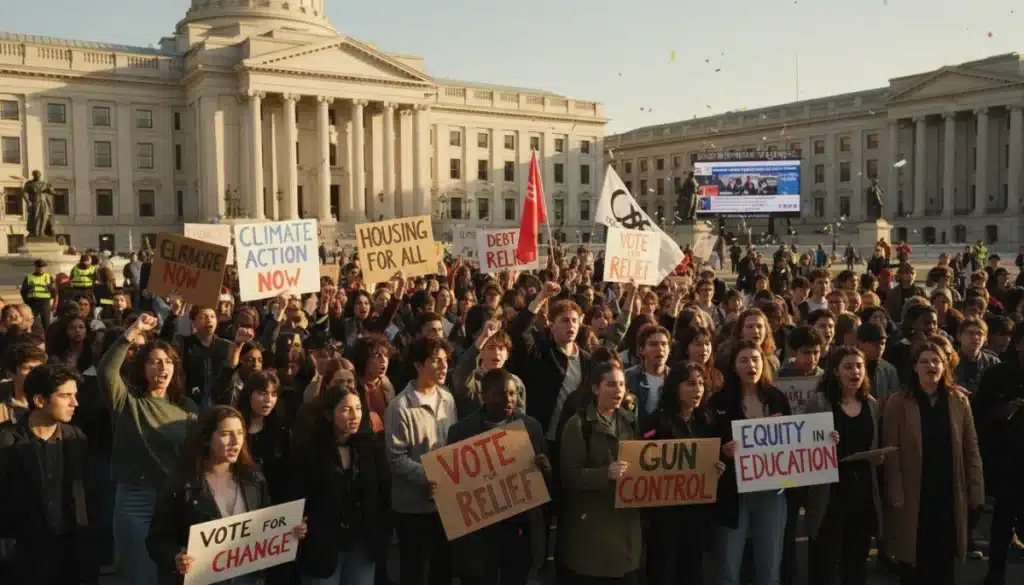
The latest developments confirm a significant surge in Gen Z Political Influence, evident in the ongoing 2026 policy debates across the United States. This report provides key facts, verified sources, and crucial insights into what readers need to monitor as this demographic reshapes the political landscape. We focus on changes, their implications, and future trends.
The burgeoning Gen Z Political Influence is now a central theme in national discourse, with their unique perspectives deeply embedded in the lead-up to the 2026 policy debates. This generation, characterized by digital fluency and a strong sense of social justice, is demonstrating an unprecedented capacity to mobilize and advocate for their core beliefs. Their impact is not merely theoretical; it is manifesting in concrete policy discussions and electoral strategies.
Understanding the mechanisms and priorities driving Gen Z’s political engagement is paramount for anyone tracking contemporary social and political trends. This article delves into the various facets of their influence, examining how digital platforms, grassroots activism, and a distinct ideological framework are converging to create a powerful new force in American politics. The implications for upcoming elections and legislative agendas are profound, signaling a transformative shift.
The Rise of Gen Z in American Politics
Generation Z, comprising individuals born roughly between 1997 and 2012, is rapidly becoming a formidable electoral and advocacy bloc. Their entry into adulthood coincides with a period of significant social and environmental challenges, which has galvanized many into political action. This generation is not just voting; they are actively shaping the narrative and demanding accountability from elected officials.
Their political awakening is largely informed by direct exposure to global crises, including climate change, economic inequality, and racial injustice. Unlike previous generations, Gen Z has grown up with immediate access to information and global connectivity, fostering a deep awareness of interconnected issues. This awareness translates into a holistic approach to policy, where various issues are seen as intertwined rather than isolated.
The trajectory of Gen Z Political Influence suggests that their engagement will only intensify as more members reach voting age and assume leadership roles. Political parties and advocacy groups are keenly observing their evolving preferences and adapting their strategies to resonate with this demographic. The 2026 policy debates are already reflecting their priorities, making them a critical segment to analyze.
Digital Activism and Mobilization Strategies
A defining characteristic of Gen Z’s political engagement is their unparalleled proficiency in digital communication and social media. Platforms like TikTok, Instagram, and X (formerly Twitter) serve not only as spaces for social interaction but also as powerful tools for political organization, information dissemination, and advocacy. This digital native approach allows for rapid mobilization and the amplification of messages on a scale previously unseen.
Gen Z employs sophisticated digital strategies, from viral campaigns and informative infographics to live streams of protests and direct engagement with public figures. They effectively bypass traditional media gatekeepers, creating their own narratives and fostering a sense of community among like-minded individuals. This direct communication channel is crucial for understanding the expansion of Gen Z Political Influence.
This digital prowess enables them to exert pressure on politicians and corporations, often leading to swift responses to public outcry. The speed at which information and calls to action can spread within Gen Z networks makes them a potent force in shaping public opinion and driving policy discussions. Their ability to translate online engagement into real-world impact is a key factor in their growing political sway.
The Power of Online Platforms
Online platforms are central to how Gen Z navigates and influences the political landscape. These digital spaces facilitate peer-to-peer organizing, allowing young activists to connect, strategize, and execute campaigns with remarkable efficiency. The decentralized nature of much of this online activism empowers individuals to contribute meaningfully to larger movements, further expanding Gen Z Political Influence.
Beyond organizing, these platforms are also vital for political education and awareness. Gen Z often consumes news and analysis directly from social media, engaging with diverse perspectives and forming their own informed opinions. This direct access to information shapes their understanding of complex policy issues and fuels their advocacy efforts, making them highly informed participants in the 2026 policy debates.
- Rapid dissemination of political information and calls to action.
- Facilitation of grassroots organizing and decentralized movements.
- Direct engagement with political figures and public discourse.
- Creation of alternative media narratives and counter-narratives.
Key Policy Priorities Driving Gen Z Engagement
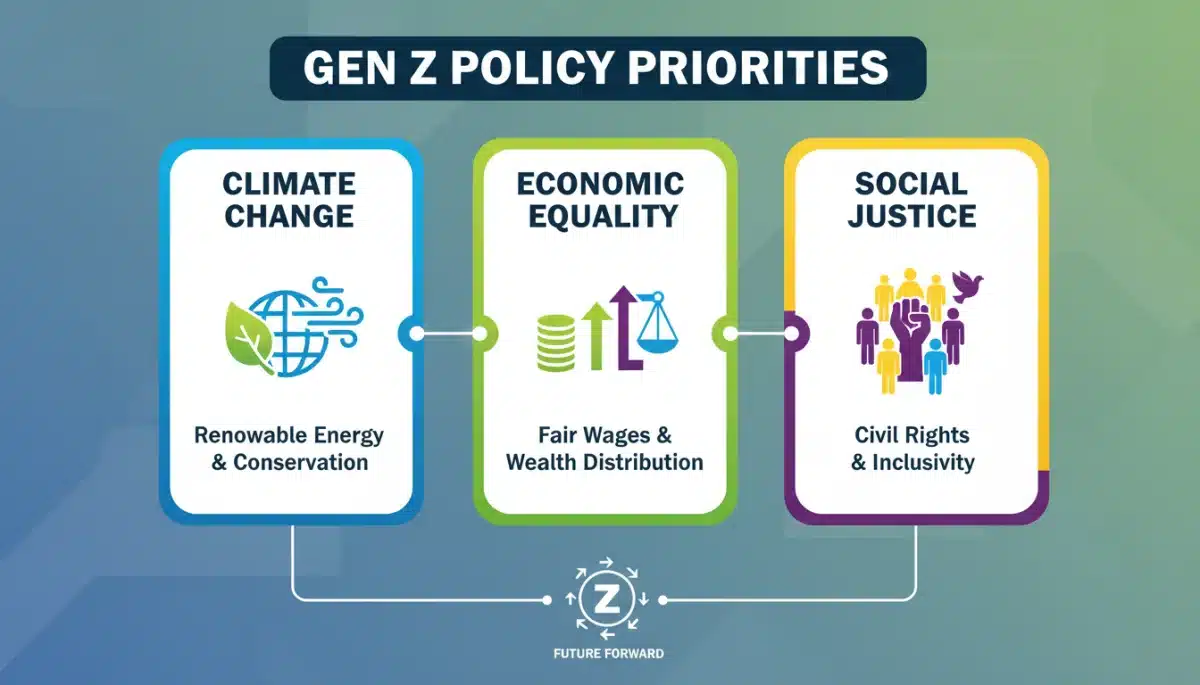
The policy concerns of Gen Z are broad but consistently center on issues of long-term societal well-being and equitable futures. Climate change stands out as a paramount issue, reflecting their impending inheritance of a planet facing significant environmental degradation. Their advocacy often pushes for aggressive, systemic changes rather than incremental adjustments, showcasing the depth of Gen Z Political Influence.
Economic justice is another critical area, with Gen Z expressing concerns about student debt, affordable housing, and equitable job opportunities in a rapidly changing economy. They often advocate for policies that address wealth inequality and ensure a more secure financial future for all. This focus on economic fairness underscores their pragmatic approach to policy-making, directly impacting 2026 policy debates.
Social justice issues, including racial equality, LGBTQ+ rights, and gender equity, are also central to their political agenda. Gen Z is often at the forefront of movements advocating for systemic reforms to address discrimination and promote inclusivity. Their lived experiences and exposure to diverse perspectives inform a strong commitment to civil rights, further solidifying their Gen Z Political Influence.
Climate Action and Environmental Justice
For Gen Z, climate change is not merely an environmental issue but a fundamental question of intergenerational equity and human rights. They demand urgent and comprehensive action, including renewable energy transitions, carbon reduction targets, and policies that address environmental racism. This unwavering focus is a significant driver of their Gen Z Political Influence in current policy discussions.
Their advocacy extends beyond national borders, often engaging with international climate movements and pushing for global cooperation. The urgency with which they approach this crisis reflects a deep understanding of scientific consensus and a frustration with perceived political inaction. This pressure is already shaping the environmental aspects of the 2026 policy debates.

Electoral Impact and Voting Behavior
While Gen Z is still a relatively young voting bloc, their electoral impact is growing with each election cycle. Their higher voter turnout compared to older youth demographics at similar ages, coupled with their progressive leanings, makes them a crucial demographic for political parties. Understanding their voting patterns and motivations is essential for predicting future election outcomes and the direction of the 2026 policy debates.
Gen Z voters are less likely to align strictly with traditional party lines and are often more inclined to support candidates who genuinely address their specific concerns, regardless of party affiliation. This independent streak challenges established political norms and forces candidates to demonstrate genuine commitment to their platforms. Their discerning approach amplifies Gen Z Political Influence.
Their participation extends beyond casting ballots; many are involved in voter registration drives, campaign volunteering, and advocating for electoral reform. This comprehensive engagement indicates a long-term commitment to political change, suggesting that their influence will continue to grow as they mature into more experienced voters and community leaders. This active participation directly feeds into the shaping of the 2026 policy debates.
Shifting Electoral Landscapes
The increasing presence of Gen Z in the electorate is fundamentally altering the electoral landscape. Their demographic weight, combined with their distinct political priorities, means that candidates and parties must adapt their messaging and policy proposals to appeal to this segment. The traditional campaign playbook is being rewritten to account for the unique ways Gen Z consumes information and makes political decisions, highlighting Gen Z Political Influence.
This shift is particularly evident in how campaigns utilize digital media and engage with social justice issues. Candidates who can authentically connect with Gen Z’s values and demonstrate a clear plan for addressing their concerns are more likely to garner their support. The upcoming 2026 policy debates will be a crucial testing ground for how well political actors have adapted to this new reality.
- Increased voter registration and turnout among young people.
- Preference for issue-driven candidates over strict party loyalty.
- Significant engagement in campaign volunteering and advocacy.
- Influence on digital campaign strategies and messaging.
Challenges and Opportunities for Gen Z
Despite their growing influence, Gen Z faces several challenges in fully realizing their political potential. These include voter suppression efforts, the pervasive nature of misinformation online, and the cynicism that can arise from slow political progress. Overcoming these hurdles requires sustained effort and innovative approaches to civic engagement, yet their determination strengthens Gen Z Political Influence.
However, these challenges also present opportunities for Gen Z to innovate and lead. Their ability to leverage technology, build diverse coalitions, and maintain a long-term perspective on social change positions them uniquely to drive transformative policies. Their resilience and adaptability are key assets in navigating the complexities of the political system, especially as they engage with the 2026 policy debates.
The political establishment is increasingly recognizing the imperative to engage with Gen Z, not just as voters but as future leaders and policy shapers. This recognition opens doors for collaboration and the integration of their ideas into mainstream political discourse. The ongoing evolution of Gen Z Political Influence promises a dynamic and engaging future for American politics, impacting the 2026 policy debates significantly.
Impact on 2026 Policy Debates
As the 2026 policy debates draw closer, the fingerprints of Gen Z’s political influence are becoming increasingly apparent across various legislative agendas. Their strong advocacy for climate action, economic equity, and social justice is pushing these issues to the forefront of national discussions. Policymakers are being forced to acknowledge and address these concerns with greater urgency and specificity than ever before.
The emphasis on long-term sustainability and systemic change, characteristic of Gen Z’s approach, is reshaping how policies are framed and evaluated. Debates around infrastructure, healthcare, and education are now often viewed through the lens of intergenerational impact and equity. This shift reflects a deeper understanding among politicians that ignoring Gen Z’s demands comes with significant political costs, bolstering Gen Z Political Influence.
Furthermore, Gen Z’s demand for transparency and accountability is influencing the style and substance of policy debates. They expect clear, evidence-based arguments and are quick to challenge rhetoric that lacks substance. This insistence on integrity is fostering a more rigorous and honest political discourse, which will undoubtedly be a hallmark of the 2026 policy debates, demonstrating the pervasive Gen Z Political Influence.
Shaping Legislative Agendas
The legislative agendas for 2026 are already showing signs of significant input from Gen Z’s priorities. Discussions around federal funding for renewable energy projects, student loan forgiveness programs, and comprehensive electoral reform are gaining traction due to persistent advocacy from youth groups. This direct impact on legislative priorities underscores the growing Gen Z Political Influence.
Beyond specific bills, Gen Z is also influencing the very language and framing of legislative discussions. Concepts like ‘just transition’ in economic policy or ‘restorative justice’ in criminal justice reform are becoming more prominent, reflecting their values. This subtle yet powerful shift in discourse highlights how deeply Gen Z Political Influence is permeating the political establishment.
Future Projections of Gen Z’s Political Power
Looking ahead, the political power of Gen Z is projected to continue its upward trajectory, fundamentally altering the American political landscape for decades to come. As they age, gain more experience, and assume leadership positions in various sectors, their influence will only deepen. Their unique blend of digital savviness, social consciousness, and pragmatic idealism positions them as a transformative force, further solidifying Gen Z Political Influence.
The long-term implications include a potential realignment of political parties, as existing structures struggle to fully accommodate their evolving priorities. New political movements and forms of civic engagement may also emerge, driven by Gen Z’s innovative approaches to advocacy and community building. The 2026 policy debates are just a prelude to the more profound changes on the horizon.
Ultimately, Gen Z’s sustained engagement promises a more dynamic and responsive political system, albeit one that will face continuous pressure to adapt to their demands. Their commitment to creating a more equitable and sustainable future is not fleeting; it is a core tenet that will guide their political actions and ensure their enduring Gen Z Political Influence. The nation’s future policies will reflect their vision.
| Key Aspect | Description |
|---|---|
| Digital Native Activism | Gen Z leverages social media for rapid mobilization and advocacy. |
| Core Policy Priorities | Climate change, economic equity, and social justice lead their agenda. |
| Electoral Engagement | Increasing voter turnout and issue-driven candidate support. |
| Future Impact | Projected long-term reshaping of political landscapes and policy. |
Frequently Asked Questions About Gen Z Political Influence
Gen Z’s influence is distinct due to their digital native approach, leveraging social media for rapid mobilization and information dissemination. They also exhibit higher rates of issue-based voting and a stronger emphasis on social and environmental justice, directly impacting the 2026 policy debates.
Gen Z primarily focuses on climate change and environmental justice, economic equality including student debt and affordable housing, and comprehensive social justice issues such as racial equality and LGBTQ+ rights. These priorities heavily inform their engagement in the 2026 policy debates.
Digital activism enables Gen Z to quickly organize protests, launch viral campaigns, and pressure politicians and corporations. This online engagement often translates into increased voter turnout, grassroots movements, and direct influence on legislative agendas, making their Gen Z Political Influence undeniable in the 2026 policy debates.
Yes, experts project that Gen Z’s political engagement will continue to grow as more members reach voting age and assume leadership roles. Their sustained commitment to social change and their innovative use of technology suggest a long-term impact on American politics and the 2026 policy debates.
Gen Z will push for more aggressive policies on climate change, economic redistribution, and social equity. Their demands for transparency and accountability will also shape the nature of political discourse, forcing candidates to address their concerns directly and authentically in the 2026 policy debates.
Looking Ahead: The Enduring Legacy of Gen Z’s Political Engagement
The increasing Gen Z Political Influence is not a fleeting trend but a fundamental shift in the American political landscape, with profound implications for the 2026 policy debates and beyond. As this digitally native, socially conscious generation continues to mature, their unique perspectives and innovative approaches to activism will undoubtedly reshape national priorities and legislative outcomes. Observing their evolving strategies and policy demands will be crucial for understanding the future direction of the United States.